
Days of My Sojourn
by
Book Cover & Preview Text
I grew up with two grandmothers and one grandfather. My grandmother on my mother’s side was called Basma. She was a stern and generally unhappy woman who had lost her husband when relatively young. She brought up three daughters, the youngest of whom, Sameeha, died in her late twenties or early thirties, leaving a little girl, Maryam. Since my unfortunate grandmother had lost her only male child in infancy, she had no man to take care of her, and thus she and Maryam came to stay with us in the one room that was our home. Like her mother, Maryam was tall, slender, and pretty. She grew up effectively an orphan. Her father, Kamel, had been a soldier in the Ottoman army. People called him Kamel Habanja. Tabanja means “tommy gun,” but since the villagers regarded him as a failure, they expressed this by mutilating the word to show that he was not worthy of carrying arms. Kamel was a wicked man who tried to sell his young daughter to be carried off to Syria or Jordan, whether as a maid or a prostitute, we didn’t know. He came to our house with another man as his witness to claim custody of his daughter, but she pretended to be sick. She begged the headman of the village, Abd al-Ghani, to keep her from her father: “I will kiss your feet, Abd al-Ghani, if you save me.” Kamel was refused custody and disappeared for years before he returned penniless to the village and his daughter. As he grew old, they reconciled, and she took care of him until he died. When people cursed him for his wickedness, she would get angry and say, “This is my father; do not insult him.” My grandmother on my father’s side was named Sultana, meaning “Princess.” What I remember most about Grandmother Sultana is her storytelling. She loved to tell stories. She would begin, apropos of nothing, “My grandson, there was a beautiful young woman who loved to stay up most of the night in the open courtyard of her modest house, away from the bed of her rough and oversexed husband. She watched the beautiful moon, who came to her in the guise of a handsome young man. The moon fell in love with her. He used to come down into the courtyard of her house like a hot disk, and she would use the full moon to bake her bread.” In Arabic, “moon” is a masculine noun, and the moon is pictured as a young man who charms young girls and kidnaps them into his mansion in the sky. My grandmother Sultana often recounted stories about the Night of Destiny, the blessed night mentioned in the Qur’an that comes every year during the month of Ramadan. “I saw it once,” she told me, “but I was too scared to ask for money, gold, beauty, a long life, or anything at all. On that blessed night, the gates of heaven are open, and all wishes and prayers are granted.” My grandmother told me that the Night of Destiny is witnessed only by people who are foolish because if they were clever, they would pray for things they wanted and their prayers would be answered. “Sometimes on that night,” she said, “something comes that crawls on the ground, which is a great treasure. If you see it, you should gently pull it toward you and say, ‘O moving treasure, come to me and the precious prophet.’” And here she would name one of the saints of one of the village shrines of the region. The pious called their village saints prophets, even though the Qur’an and Islamic tradition insist that the final prophet is Muhammad. My grandmother was especially fond of our village holy man, Muhammad al-Baaqir, whom she called “the prophet of the open secret.” By this phrase, which was her own, I think she meant that prayers to the saint to intervene with God would be quickly heard and answered. I sometimes asked my father for a five-piastre coin, which I gave to Grandmother Sultana to tell me yet another story. I especially loved the story of the genie prince who appeared in the guise of a camel. He would come with a group of his fellow genies, who were like elves, and sit under a coffee tree. One of the elves addressed the tree, saying, “O tree of coffee, lower your shady branches, for our master the camel is coming to visit.” A beautiful young princess heard about this and became deeply enamored of the camel prince. After a long search, she hid in a tree near the gathering place of the genies. All the genies, young, beautiful, and happy, ate, drank, and danced. As they were dancing, the princess jumped down from the tree and threw herself at the feet of the camel prince. He immediately fell in love with her. The prince took the princess to his country, but his people resented her because she was of a different order of creation, a human wife of a genie. The prince also had a genie wife. Jealous as she was, she would give the princess impossible tasks. For instance, she would hand her a small, dirty piece of sackcloth (the word my grandmother used was junfays) along with the tiny remains of a bar of soap and tell her to go to the stream and bring back the cloth clean and the soap intact. The camel prince would appear every time and accomplish each task for her. Every time his genie wife tried to do his human wife harm, he saved her. Eventually, he transformed himself into a human prince, and they lived together happily ever after. These were three of my grandmother Sultana’s stories. But there was another story, a terrible one, that I never completely understood, which I will tell later.
Formats

Book Details
About the Book
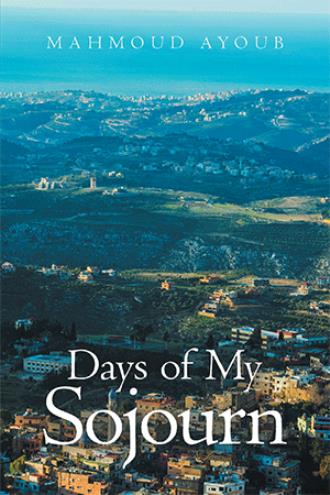
Days of My Sojourn tells the story of a blind child born in the 1930s into a family of peasants in southern Lebanon who rises to become an eminent scholar of the history of religions. It begins
with Ayoub’s loss of sight shortly after birth and ends as he leaves Lebanon for America with a degree from the American University of Beirut, where he was the first disabled person to gain admission. Sojourn paints a vivid picture of the Lebanese society of the time with its rich and poor, Muslims, Christians, and Jews. As Ayoub writes in the introduction: “This book is a work of memory rather than history or even autobiography.
The characters and events that appear in my account of my village, Ain Qana, are what I remember as a boy, inevitably mixed with the rumors and legends of the place. My story of later periods depends more on what you may call facts—but what do facts matter in the telling of a life?”
About the Author
Mahmoud Ayoub was a scholar of Islam, comparative religion, and interfaith relations. Educated at the American University of Beirut, the University of Pennsylvania, and Harvard University, he wrote extensively on Islam and interaction among religious communities. In Days of My Sojourn, completed shortly before his death in 2021, he turns from academic scholarship to portray the South Lebanese society that shaped his early life.