
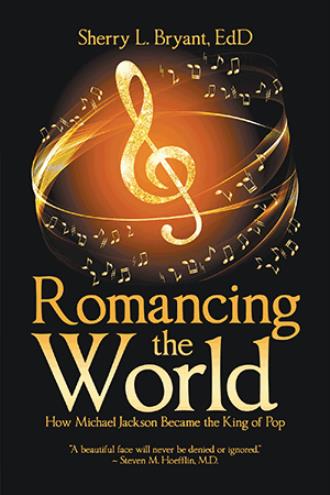
Romancing the World
How Michael Jackson Became the King of Pop
by
Book Cover & Preview Text
Chapter 1 The Manifesto of a King Some lives unfold like stories. Others unfold like arguments. Michael’s life was both. Born in 1958 in Gary, Indiana, into a two bedroom house shared with a large working class family, he grew up in an environment where music was not abstract. It was rehearsed in the living room, shaped by discipline, and driven by expectation. Even in those early years, something deep was forming. His life would be not only a story of ascent. It was also an argument about value, genius, recognition, and who is permitted to be crowned in a culture that has always rationed its thrones. That conviction did not arrive in a single moment. It formed over time, under pressure, through performance, comparison, and an increasing awareness of how he was seen. He knew what he could do. He knew what he had already done. And he knew, with precision, that the world did not yet see him as he saw himself: second to none. This was not boastfulness. It was a conclusion. By the late 1960s, he was already performing nationally with his brothers, his voice and presence drawing attention far beyond his age. At the age of eleven, he had outperformed adult singers on national stages. As a teenager, he held the attention of audiences across the country. By the early 1970s, he had already reshaped popular music once. Now he was preparing to do so again. He understood his prodigiousness instinctively, the way Wolfgang Amadeus Mozart did. Not as aspiration, but as reality. Michael Jackson did not drift into kingship. He moved toward it. To understand him, we must begin there. Not with fame, but with conviction. Not with success, but with recognition withheld. That absence shaped what followed. The Politics of the Crown By the early 1970s, the American music landscape already had its titles. Elvis Presley was “The King.” Bruce Springsteen would later be called “The Boss.” These titles were not casual. They signaled the permission to be mythic, to represent something larger than oneself, to embody cultural authority. Michael watched closely. By the time Off the Wall was released in 1979, he had lived several artistic lives: Motown prodigy, teen idol, television performer, and emerging adult artist. He had achieved what few child performers manage. He crossed into adulthood with credibility intact. Yet the language surrounding him remained constrained. He was described as a “pop star,” a “former child prodigy,” a “Black entertainer.” Not a king. Here the gap becomes visible. Contribution and recognition did not align. He understood how race, genre, and history shaped who could be elevated, and how Black genius in America is often celebrated without being enthroned. That gap became instructional. It formed the underlying logic of his manifesto. Success alone was insufficient. Recognition had to match it. He pursued that alignment with intention. The Beauty He Chose There is a line spoken by the enacted character of Bob Dylan in the film A Complete Unknown that captures something essential about fame: “You can be beautiful. You can be ugly. But you can’t be plain. You have to be something people can’t stop looking at…”1 Michael understood this long before it was articulated that way. By the late 1970s and early 1980s, his appearance became increasingly deliberate. Costuming, posture, gesture, and silhouette were no longer incidental. They were constructed. The body became an instrument of design as much as movement. This was not vanity. It was strategy. Kingship requires visibility. Visibility requires distinction. To romance the world, he had to become unforgettable. The Irony of Lisa Marie When Michael married Lisa Marie Presley in 1994, the media treated it as spectacle. The symbolism, however, had been forming for decades. In 1974, when Lisa Marie was six years old, her father, Elvis Presley, brought her to see the Jackson 5 perform in Las Vegas. Michael was sixteen. They did not yet know one another in any meaningful way, but the image gains force in retrospect. The daughter of one king watching the emergence of another. Psychologically, such a relationship can be read through familiarity. Shared environments. Parallel pressures. Both grew up inside global fame, shaped by powerful fathers and constant public scrutiny. Their connection was not as improbable as it appeared. At another level, the symbolism is unmistakable. The man who would become the King of Pop marrying the daughter of the King of Rock and Roll. This was not purely personal. It was cultural. What appeared contradictory may have been something closer to recognition. Two lives, formed under similar conditions, meeting in a way that resisted easy interpretation. Closing Movement Michael’s life was not a sequence of events. It was an arc shaped by perception, discipline, and an increasingly precise understanding of his own magnitude. From a childhood grounded in observation and performance, he moved toward something larger. An identity that would not simply respond to culture, but reshape it. This book traces that movement. From innocence to authorship. From presence to power. From performer to king.
Formats

Book Details
About the Book
Michael Jackson changed the way the world views and enjoys music, movement, and emotion. But how was he experienced by his adoring audience?
In a nonconventional biography, Sherry Bryant offers a fresh, insightful interpretation of his life and work, tracing his evolution from gifted child to innovative artist and then to enduring cultural symbol. While drawing on performance studies, cultural theory, psychology, and media analysis, she looks beyond familiar narratives to examine the deeper forces that shaped his trajectory: the school of Motown, the rise of charismatic authority, the construction of a global spectacle, the pressures of relentless visibility, and the persistence of creativity under extreme conditions. Through this lens, Jackson’s story becomes a study in perception, power, and the emotional architecture of fame as he transformed into a world builder who reorganized attention, shaped feeling, and transformed the emotional vocabulary of a generation.
Romancing the World offers a fresh portrait of a musical genius who captivated the world—and the imprint he left behind.
About the Author
Sherry L. Bryant, EdD, MFA, is an educator and writer working at the intersection of adult learning, human-centered artificial intelligence, and cultural analysis. She holds a doctorate in adult education and educational psychology, and a Master of Fine Arts in writing, along with several other advanced degrees. Romancing the World: How Michael Jackson Became the King of Pop reflects Bryant’s interdisciplinary approach by combining narrative analysis with theoretical insight to explore the trajectory of Michael’s cultural influence and the experience of his presence at a global scale. Originally from Indiana, Bryant now lives with her family in Orlando, Florida.