
My Father’s Faith
by
Book Cover & Preview Text
Introduction
The day started as uneventful, just like most other wintery mornings in eastern Ohio, except I neglected to view the news and weather forecast on the local television station while dressing. The air was crisp and dry when I began my thirty-minute commute to work. As time passed, I heard talk of an impending storm from my fellow teachers but prayed it would simply pass over. At every opportunity I glanced outside the window, hoping my fears were not justified.
Just after lunch the announcements began for the early dismissal of one school district after another. A sick feeling was housed in the pit of my stomach as I anticipated the treacherous ride home. My head began to ache when I realized I didn’t even have the simplest of tools readily available to remove mounting snowdrifts from my car.I had inadvertently forgotten to transfer a snow brush from my kitchen to my car. I would be forced to remove the five or so inches of snow by hand, without even the benefit of gloves. I hesitantly walked toward the exit, mad at the blizzard and myself. Then I spotted him.
My father was next to my car, sweeping snow from the windows and body of the vehicle on the icy parking lot, working away without hesitation. He had already dug out the area around the car and put ashes near the tires. He smiled as I approached, and I thanked him profusely for his assistance. Something in his smile always gave me peace. He inquired about my day and encouraged me to spend the night at his house rather than risk an accident.Extra clothes were always at my parents’ house, and I knew he would drive me to school the next day, if necessary. Once the removal was complete, he left to clear another car at another school to ensure that my sister would be safe.
Years earlier my father had accompanied me to a conference regarding a teaching position. I overheard the interviewer jokingly refer to him as my bodyguard. If that was what he needed to be, that was the role in which he served. That was the kind of father he was, always there when one needed him. I came to depend on him when trouble was on the horizon or when I could simply use a word of encouragement. I believed that his prayers were more powerful than my own and that he could touch the throne of glory with ease. He stood up for his children and raised us to be proud of our heritage. He defended and protected us for as long as he had the breath to do so. His strong Christian virtues as a man and father are the premise for this writing.Anyone can record his or her life’s story for the sake of writing. Biographers have been known to dredge up memories that might have been better left forgotten. Other authors dig deep into their souls and find something meaningful to impart that gives insight into present, past, or future difficulties. At my retirement party as principal of the New Castle Junior/Senior High School, I received a gift from a friend, an unlined journal.
She said, “Now write the book.”I procrastinated for three years. So many conversations ran through my mind. Numerous experiences in my life and educational career made it difficult for me to decide what to tell and what not to tell. There were also those stories that nobody would believe if I told them. Although honesty was my best policy, I did not want to offend anyone who might recognize him- or herself in my storytelling. Still I had a compelling duty to remain true to my own convictions.
This work has also allowed me to review and adjust my thinking, to some extent. As I reflected on the past, I recognized that persons who had offended me were held in high esteem by others at the same time.A measure of peace emanates from me as I examine the course of my life walk and share it with people along the way. I am convinced that all we enjoy and endure have been sifted into the making of more perfected beings.
I have told the stories in narrative form. I didn’t want to change the names of those involved in order to “protect the innocent,” so many have not been identified, or they have sometimes been referred to in unrecognizable terms. I am mindful that these experiences are viewed through the lenses of my own eyes. Therefore my feelings are exposed in the text but in the most objective format at my disposal. All the positive and negative events have ultimately worked together for my good and provided the core of my personal testimony.I believe, however, that faith goes far beyond the borders of my being and thinking. I have included educational research on spirituality and faith to validate the academic philosophies that I have come to acquire. Other opinions are my own.
This book is entitled My Father’s Faith because of the profound effect that my late father, the Reverend Israel Lee Gaither II (May 18, 1913–January 31, 1996), had on my life. He was a loving father, a hardworking husband, an exceptional singer and preacher, a long-suffering pastor, and an excellent model for those who wanted to walk in the Christian faith. His eighty-three years on this earth should not go unnoticed. His legacy continues to live on. I trust that these few passages give a glimpse of the man I loved and admired.
Formats

Book Details
About the Book
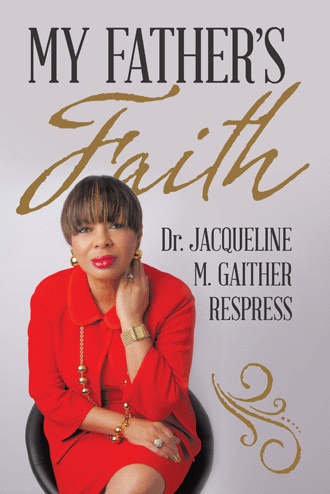
My Father’s Faith tells the personal and inspiring story of the Christian faith in action in the life of Dr. Jacqueline M. Gaither Respress, a lifelong educator. She blends together narratives, poetry, passages from the Scriptures, significant quotations, and her own research to accomplish two entwined goals.
In the pages of My Father’s Faith, she shows how the strength of her Christian beliefs, passed on to her by her father, in particular, has sustained and strengthened her. Second, she uses her own story to map out a hopeful path for other African American women. She diagnoses the challenges and barriers that minority women—both in youth and adulthood—face in American culture. She shows how hope that touches the lives of academically challenged students finds a face in teachers who remain focused on helping their students learn.
Whether you find personal testimonies of the power of faith to be inspiring or you desire to learn how the educational system can become a support to young minority females, My Father’s Faith will meet your expectations. Along the way, you will come to know Dr. Respress and to appreciate the beauty of the faith that she inherited from her own father.
About the Author
Dr. Jacqueline M. Gaither Respress, now retired, earned a master’s degree in education and a doctorate in educational leadership. Her career in education includes positions in western Pennsylvania as a teacher, principal, and part time professor. She and her husband, Rev. Torrance Respress, live in the Houston metro area.