
Speculations about God and the Cosmos
by
Book Cover & Preview Text
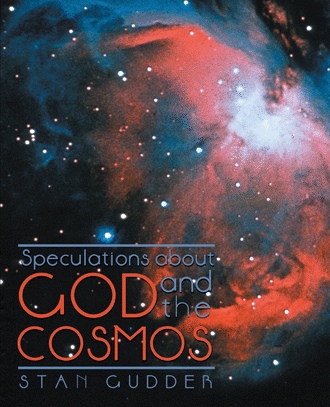
In Chapter 12 of this book, the character, Robert Freeman, says: “The road to knowledge begins with asking the right questions.” But what are the right questions and to whom do we ask these questions? The right questions are the deep and penetrating ones. They lie far below the surface and require great insight and ingenuity to answer. We can ask ourselves, our friends, experts in the field or ultimately God. But we must be prepared for the fact that some questions cannot be answered, not even by God. When experts consider a question to which they don’t know the answer, they frequently go to the laboratory or into the field and perform experiments. If the experiments are successful, the results give partial answers to the questions. Theoretical scientists usually try to answer questions using theories and computations. If the question is of a scientific nature it is probably best to go to an expert. If the question is spiritual it is best to go to a spiritual leader or to the ultimate source, God. If you don’t believe in God, this book might change your mind. Or it might not. If you do believe in God, he might be similar to the one described here and he will answer some of your questions.
Some of the scientific questions asked in this book are: why is there more matter than antimatter, what are dark matter and dark energy, is time-travel possible, is faster-than-the-speed-of-light-travel possible, how did the universe begin and how is it evolving, what principles govern the workings of the universe, is there one universe or many parallel universes, what is reality? You must remember that this book is a work of fiction! Some of the answers to these questions as offered here are close to the truth, but they are not always precise and perfectly accurate. Some others are pure speculation. I think you will be able to tell the difference and if you can’t, just remember that you are reading a novel and no harm will be done.
Some of the spiritual questions asked are: is there a heaven, is there a hell, is there a God, are there angels, do we have souls, if so where do they go when we die, does God hear our prayers, does God care, does God intervene, are there angels here on Earth? Answers to these questions will be given by God himself. A question that people have asked for centuries is: if there is a benevolent God, why is there so much evil? Why is there so much pain, suffering and despair? Some possible answers will be given in the story presented here. Whether you believe these answers is up to you. If it just gives you food for thought, then I will have achieved my goal.
Some of the characters in this book were inspired by actual persons. Two of the obvious ones are Walter Cronkite and Richard Feynman. But these characters were only inspired by these individuals, they are not intended to be accurate depictions of them. I have used names similar to the names of real people because it enabled me to visualize them in their actions. I did not intend to offend anyone, so if you see a name that’s similar to yours, please consider it the compliment I intended and do not sue me.
Although I usually began each chapter with a premise, it did not feel as though I wrote this book consciously. Instead, the words seemed to simply flow naturally and logically onto the page, without obvious effort on my part. Of course, the underlying themes are the title of the book. This is my first novel and my main credential for writing it, is that when it was completed, I was 78 years old. Not many first time novelists can make this claim and I believe that this ripe age has given me some experience and wisdom. Most of my career has been devoted to applying mathematics to solve problems in physics. This field has enjoyed a long tradition beginning with Archimedes, continuing to Isaac Newton and in modern times, John von Neumann. As a professional mathematical physicist, I can certainly say that I know more mathematics and physics than the average person. I cannot make this claim about spiritual matters. But what does it mean to be an expert in spiritual knowledge? Does it mean someone who knows about the various religions and how they compare? Does it mean someone who knows a lot about God? I don’t think so. Spiritual knowledge is a very personal matter, that only comes from experience and deep thought.
A recurring theme is the important role that mathematics plays in the cosmos. In order for you to understand this, I have included a dose of mathematics. But this dose is given with a spoonful of sugar, and I think you can easily digest it. The only thing required is a little high school algebra. Just take a deep breath and you might even enjoy it. If you find the mathematics too intimidating you can skip it, if you must, and there will still be a worthwhile story to read.
I would like to thank my best friend and partner, Paula, who typed the manuscript and served as a thoughtful critic. Also, I would like to thank my family and friends who read the manuscript, made corrections and suggested improvements. In particular, I am deeply indebted to my dear daughters, Dolly and Gail, who spent many hours editing the manuscript. Although it wasn’t planned, this book has become a gratifying family project.
Formats

Book Details
About the Book
Two years ago, twelve-year-old Emma Hartman and her father, Gary, were part of a larger family. But Emma’s mother and two siblings died in a tragic accident after a camping trip in the mountains of Colorado. While her dad tries to rescue the three from the car, Emma witnesses three beautiful sparks lighting up the sky.
Itamar Pitowski is a visiting professor of philosophy and physics at Princeton University. He delivers an introductory lecture about what is known about the universe, and he answers some burning questions about religion and physics.
Walter Crondike, a news anchor and investigative reporter, receives an unexpected visit at the office from Brian Landy, a young man claiming to be an angel who has a message to deliver from God.
Through Emma, Itamar, Walter, and a slate of other fictional characters, Speculations about God and the Cosmos tells a story about math, science, and speculation. Narrating a tale of heaven and earth, author and mathematician Stan Gudder attempts to answer some of the big questions that have occupied the thinking of mankind for thousands of years. These questions have remained unanswered, but because of recent advances in math and physics, many are getting closer to their resolution.
About the Author
Stan Gudder is an emeritus professor of mathematics at the University of Denver. His research interests are mathematica physics and the foundations of quantum mechanics. He’s written over 300 technical papers that have appeared in scientific journals. In addition to teaching and being with his family, he skis and creates mathematical art.