
The Friend in Question
by
Book Cover & Preview Text
Chapter Two, pages 12 – 13
The Present: A Person Alone on the Bridge
I thought I could make it. Now it started snowing. The bridge was getting some ice. There were few cars on the road. I wondered what time it was. When I passed the church on Fourth Street, I saw the clock marking twelve. Was that the time? Did the clock stop? When did I leave? Where was the sandwich I saved from yesterday? I needed to look at the address one more time.
The small spiral notebook was in the backpack that hung loosely from my shoulder. Reaching into the backpack, I took out the book. My hands were shaking badly. I began to turn the pages slowly. Wet snowflakes began to fall on the pages, turning the cheap paper into a mass of muddy gray spots. I squinted to look at the faint writing, but the address was not legible in the fading light. One page was flapping in the wind. I grabbed the soggy page with a free hand, and another page stuck to it. Slowly ripping out the pages, I brought them close to my face for a better look. slowly turned toward the railing, where the light was better, and back to the road. One foot stepped backward off the pedestrian walkway. A sudden gust of wind tore the pages free from my trembling hand. The papers spiraled and twirled out onto the road as I slowly turned to catch them. I was off balance, swaying into the roadway. A purring mechanical sound was coming across the Overpass bridge. My body stiffened; balance was gone. The impact came. I was a rag doll figure rolling over and over, suspended yet moving, with the sense of flying across a smooth sheet of pulsing steel. I fell onto the pavement, my arms and legs flailing. Seconds, minutes, or hours may have passed. A face looked down with horror at me. It was a beautiful face, distorted with fear and pity. It wore bright red lipstick and had clear blue eyes. Then darkness came.
Chapter Three, pages 21-22
Why could I not stop thinking about a lone person lying in a hospital bed? She was unconscious, as far as I could find out, and no one knew who she was. Maybe the police would let me take a look at the notebook the woman had. What would it hurt to ask?
As I left the house and walked to my car in the driveway, I bent to pick up the morning paper laying near the mailbox. The front-page headline under-the fold story caught my eye. There was police sketch of a woman and a half-page article about the accident.
It was reported that the woman was still unidentified, which meant there were no fingerprints on file for her. No one had come forward to report a missing friend. Since the woman was still unresponsive, although the word “comatose” was not used in the article, the police and hospital authorities were stymied at this point on being able to contact any relatives or friends about her condition. The usual plea was made for anyone to come forward and contact the police if the sketch looked familiar. Nothing was said about the driver of the vehicle that hit her. A wave of relief washed over me. I was the driver of that vehicle. It simply said no charges were filed. The article stated that the incident happened on the Mountain Road overpass bridge of the interstate. The date of the accident was given, suggesting those details might prompt someone to remember a friend or relative who had not been heard from recently. The homeless shelters in the area had been canvased, but no one on staff or volunteers remembered a single woman matching the description: Caucasian, five foot five inches, graying blonde hair, blue eyes, 125 pounds, and one small tattoo with two roses wrapped around each other.
The initials M&K were written small and delicately on one petal of the entwined roses. The tattoo was located above the ankle bone on the inside of the right leg. There was a photo of the tattoo to help jog someone’s memory.
Formats

Book Details
About the Book
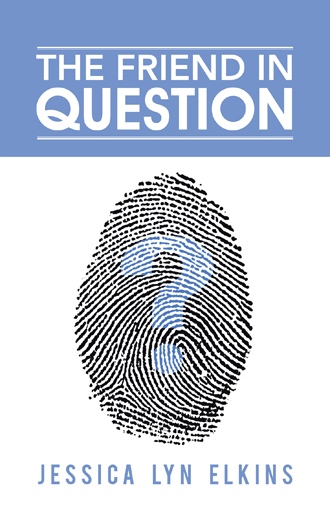
When Katherine Phillips, a well-known community leader with a failing marriage, accidently strikes a pedestrian who steps in front of her vehicle on a snowy day, she has no idea how her life will change. The unconscious victim, an unidentified homeless person, is taken to a hospital. It isn’t until police release a photo that Katherine realizes the person is someone from her past.
Growing up in a small town, Katherine and Myra Martin met in elementary school and were best friends until high school graduation. They lost contact as their lives moved on to college and careers. How far will a friend go to learn what happened in the intervening years? Katherine is determined to learn the truth—but what she discovers may upend not only Myra’s life but her own as well. As family secrets, fraud, and betrayal emerge, both women come to know the truth about the consequences of their choices.
In this novel, two childhood friends are reunited and soon find that secrets from the past entangle them and unknown connections between them complicate the present.
About the Author
Jessica Lyn Elkins grew up in a small town in Texas. She is a poet whose work appeared in publications of The Live Poets’ Society of Santa Fe, New Mexico. She and her husband live in Alachua County near Gainesville, Florida. This is her first novel.