
IVY
by
Book Cover & Preview Text
IVY By E.R. (Flip) Flippen Chapter One Foley, Texas 1880 Sam Ordway was a slender man, a little taller than average, his face the dark tan color of oiled leather made so by a never ending battle with cattle country sun. He was seventy years old but looked sixty, because he was still wiry lean with muscle and walked as straight as a bronze statue that moved. He had been reflecting back on those years all morning, for he realized his courage, once fiery red, was turning yellow as time drew near for him to face what he judged would be his last big confrontation on earth. He found some satisfaction in knowing his courage had yet to fail completely; it was still brassy orange like the tint of the saffron powder Claire Winslow made when she baked. For the last twenty years Sam Ordway had been town marshal of Foley, Texas. The earlier years had seen him as soldier, miner, cowhand, and rancher. His father was Sergeant John Ordway, one of the original members of President Thomas Jefferson’s Corp of Discovery known to the world as the Lewis and Clark Expedition that traveled from Saint Louis to the Pacific Ocean and back in the years 1803-06. Sergeant John Ordway was chosen to keep the official journal of the Expedition because he was the most educated of the group, including Messrs. Lewis and Clark themselves. Sam had only a copy of his father’s journal. The original was in the Smithsonian donated by Captain Lewis Meriwether and Lieutenant William Clark. The two leaders gave John Ordway three hundred dollars for it, and he spent the money on an apple and peach orchard located on the half section of land the government warranted him for making the expedition. The three hundred and twenty acres of land was at New Madrid, and the venture was highly successful until the orchid was lost to the New Madrid earthquake. The quake had been so violent it lifted sections of the Mississippi River high enough so the river actually began flowing backward in places. The family escaped with only their lives making it necessary for the family to separate. It was then Sam began an odyssey that could be ending with the confrontation in Foley. Sam had two hand-written letters his father had posted to his mother back in St. Louis, so they had some value. The letters, a few books, some gold nuggets, a small bank account, his clothes, boots, two horses, a saddle, Colt, Winchester, double-barreled shot-gun, and a small three-room house on one improved acre on Cedar Street one block north of Main Street in Foley, were the only things Sam Ordway owned. He wondered if those possessions were all his life had counted for. “I have memories, by God; I have a history book full of them,” Sam muttered with only himself listening. Realizing he had let his mouth speak private thoughts aloud, he chastised his inner self by adding, “Afternoon is a poor time to be daydreaming.” He looked out the window then, just in time to see young Jimbo Winslow running across Main Street as fast as his pudgy legs could carry him. Sam, pulling his boots down off the battered old desk, got to his feet. There could be no mistake as to where the youngster was headed. The marshal’s office with its four-cell jail sat in the center of the block, solitary as a leper, isolated from the homes and businesses of Foley. The citizenry and Old Bill Foley had taken great care to separate the jail from the rest of the town when they chose to begin building it along the banks of the narrow San Antonio River under the shade of its thick but humble trees; they loved law and order and despised the sight of drunks. Sam, standing in the open door now, listened to the sound of Jimbo’s boots thumping on the boardwalk racing toward him. He expected the widow Winslow needed her milk cow penned. The Jersey was like a magician at getting through the fence. Perhaps the widow needed some other manly task, for Sam afforded the lady the strength of his services from time to time since she had no other man around. He suspected, no, he was sure; the widow needed a masculine service he might be too old to provide, because on occasion she pressed her shapely bosom against him. Sam felt sorry for her in that respect. Most of the men who worked on the two big ranches were Mexican. The others were young and shiftless, and the shopkeepers were all married; the widow deserved better. “Marshal! Marshal!” the freckled-faced youngster yelled bouncing up the boardwalk, his voice high with excitement, “The stage is coming back. Somethin’s wrong. A holdup, maybe!” Sam turned back quickly and reached for his double-barreled shotgun in the gun rack. He wanted the weapon as a show of force for the citizenry and to please the impressionable young man. The stage had left Foley going south an hour ago; if it had been robbed, it would not be returning with robbers in it. “Come on, Jimbo. Let’s go see what the trouble is.” Main Street, following the pattern of western cow towns, was plenty wide, wide enough so that Twelve-team freight wagons could turn around without having to go past one end of town or the other to do it, and the pair took off at a trot with Jimbo Winslow leading, tugging the marshal’s left hand. With their boots stirring up little dust devils, they angled across Main Street passing the Cattleman’s Hotel heading for the stage office next to it where the pair stood waiting impatiently at the hitch rail outside the Butterfield office looking intently down the road at the stage rumbling into town toward them. Moments later, the stage pulled to a stop in front of the Cattleman’s Hotel before it got to the stage office where they were standing. Mystified, Sam Ordway, tugging the child’s hand now, hurried down the boardwalk to the parked stage then he pulled up suddenly when he realized this was not the regular stage; there was no Butterfield sign painted on the door, no marking at all, and the driver was not the Butterfield driver. Sam, Jimbo in one hand, his shotgun cradled in his other arm, moved quickly passed the lathered team, and the two pulled up to the side of the coach just as the driver jumped down and was beginning to open the door of the stage. “What’s wrong?” Sam asked tapping the stranger’s shoulder. “The team’s spent. You runnin’ from somthin’?” “Nope,” the man replied turning to face him. “It’s Miss Ivy’s orders. She likes to be off the road before dark, and we didn’t know the exact distance,” and he turned and opened the stagecoach door. Adding to Sam’s confusion, a rider appeared from behind the coach mounted on as fine an animal as Sam had ever seen, and he dismounted at the hitch rail forcing Sam and Jimbo to move aside. “Sorry,” the rider said. Sam grabbed the rider’s shirtsleeve as the man was turning to escort whoever was on the stage into the hotel. “I know your face,” he said. “You look to be John Wesley Hardin. Are you?” “His younger brother, Matthew,” the rider replied. “I bother easy, but I’ll be no bother unless I’m bothered. I’m the lady’s bodyguard, not a desperado like John Wesley. Besides, your dodger’s a bit outdated. John Wesley’s not wanted. He petitioned the governor for a pardon and got one. He studied law in prison, and he’s practicing in El Paso.”
Formats

Book Details
About the Book
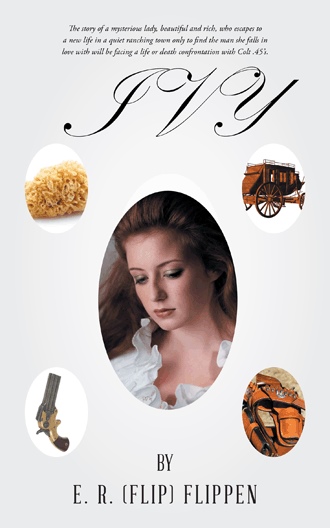
Ivy Vanderbilt is a landscape artist, beautiful and rich, and her wealth came from sponges that were not used for bathing. Young Bill Foley is attracted to her, and she to him. The shadow on the romance is Wyatt Winslow. Wyatt was presumed killed in the War of Secession but has returned to challenge Young Bill because he fathered a child with his sister but refused to marry her.
Young Bill is not worried, because he has been trained by Lyle Sanford, the quick-draw artist in Buffalo Bill’s Wild West Show, but Wyatt outdraws Ivy’s bodyguard, so Young Bill knows they are fast enough to kill each other; if that happens, Wyatt wins. Sam Ordway is seventy but wiry lean and looks sixty. He is Town Marshal of Foley, Texas. Abbey Foley is his daughter.
Abbey has married Old Bill Foley, Catholic Irishman and wealthy rancher, and their only son is Notre Dame educated, Young Bill. Old Bill admits to Sam he is Molly Gibbs father.
Molly is Molly, and her beautiful head of Foley hair is there for everyone to see even if she doesn’t know where it came from.
About the Author
E.R. (Flip) Flippen has celebrated fifty years in the practice of Pharmacy. Earning his degree at the University of Houston, it was necessary to take a course in English Literature, and he developed a keen interest in writing. Ivy is one of two western themed novels. He is currently working on a non-fiction project melding medicine with some true experiences from his Pharmacy practice. His other interest is working dogs, especially British Labs.