
A World Elsewhere
by
Book Cover & Preview Text
“How much longer do you plan to stay in here?” Karuna whispered as she circled her right palm over her stomach. It had grown larger than the largest pumpkin she had seen. She felt the foetus move as if in reply. Tight as a drum, her skin was stretched thin. She could see the veins branching out like a map of the Deccan delta.
Karuna was getting dressed after her morning bath. She wiped the sweat off her forehead with the anchal of her cotton, pasapalli sari. Woven in red, white, black and yellow, they represented the colours of Lord Jagannath. She sighed in sympathy, knowing why her child had chosen to spend a little bit longer inside her.
Why do I sweat after a bath? Karuna wondered, powdering under her full breasts and armpits that smelt of sandalwood soap. The sultry weather weighed her down. Mid-July in Cuttack, the sun’s rays penetrated each pore of the skin like tiny flaming arrows. Being heavily pregnant intensified everything – colour, sound, smell, taste – especially the heat and dust. The monsoon storms quenched the parched earth, cooling things down. But the thunder and lightning left Karuna in one of her moods. Life rushed past, puffing and whistling like a train, each day a different compartment with its special spell.
“Who are you talking to?” Aditya, her husband, enquired.
He noticed his wife had recently started talking to herself. So preoccupied was she conversing with her child she did not see him until he appeared right before her.
Karuna exclaimed, “She moved!”,
“She?” Aditya teased. “How do you know the baby is a she?”
“I know – women know these things,” she said. They already had a son, Vikram. Karuna wanted a daughter. “We’ll call her Armita!”
“Armita Guru!” said Aditya, as if announcing the arrival of someone important at an august gathering. Nodding with approval, he added, “The universe was created out of Divine desire – all children are God’s gift expressed through our desire. I do like the conjunction of Desire and the one who teaches, enlightens! But if we have a boy, what will you call him?”
“It’s a girl. We’ll call her Asha at home. But, we can decide all that later. Don’t you have to go to your convocation? You’ll be late,” Karuna reminded him.
“I don’t think I can accompany you to the hospital tonight. This convocation has taken up more of my time than I expected,” he apologised.
Aditya doted on his wife, who was twelve years younger. Soon after completing his masters from Calcutta University in 1950, the year India became an independent, democratic republic, he joined Harrison College in Cuttack as a lecturer. Established in the 1870s by the British, it was the premier educational institution of the East Indian state of Orissa. Marriage followed, and now six years later he was a householder expecting their second child.
“Everything takes time when you do it with care. But if you want perfection, you must be prepared to pay the price,” Karuna said, appreciating her husband’s dilemma.
“We are born the way we are! What can I do if I was born meticulous? The chief minister, governor, and the education minister will be there. Bapa will also be attending,” Aditya replied, referring to his father-in-law, Siddhartha Mishra, who was the secretary of state for education. “But what puzzles me is your expected date of delivery. It is long past. Yet no one seems to know when Armita, our Asha, will be born?” he added, pausing the moment he realised he, too, had referred to their unborn child as a girl.
“Asha will arrive when she is ready. She is preparing to face the world. How can doctors predict these things? Don’t worry. Bapa will drop me off at the hospital this evening,” Karuna replied, inspecting her husband’s attire.
With his jet-black, wavy hair brushed back, he looked handsome yet dignified in his white chudidar and black sherwani. The tight chudidar, its rings gracefully clasping the ankles, with the sherwani hugging the body from his waist up, enhanced his height and slender build. His smile revealed a perfect set of white, gleaming teeth. As a student in Calcutta, his looks and manners, his thoughtfulness and generosity had earned Aditya the title ‘Prince of Mayurbhanj’. Now he was the ‘Prince of Harrison College’, and they were the ‘royal couple’. Karuna was well known for her beauty, poise and grace. At this late stage of her pregnancy, she had lost none of her charm and allure. She was positively glowing.
Karuna preferred the comfort of a ride in her father’s Chevrolet to being ferried around in a rickshaw. As they made their way to the hospital, the incipient pain she had been nursing all day, which incidentally started not long after her little chat with her daughter, got worse. Normally Karuna enjoyed sitting in the back seat of the car, resting her body against the soft leather, which was specially waxed by the driver. Daily he polished the body of the car until it reflected the world around it like a mirror that represented everybody according to the goodness of their heart. Karuna would settle herself in the car as if occupying a comfortable seat in a theatre. She loved watching the grand ceremony of life unfold as they drove through the bustling streets of Cuttack. Today, she felt restless.
Siddhartha had booked one of the maternity cabins in the local medical college and hospital founded by the Maharaja of Mayurbhanj. Built in the days of the Raj, the self-contained accommodation was private and comfortable. Located in the sprawling acres of leafy, deodar-lined grounds of the hospital, it was within easy reach of the best medical assistance one could get in Orissa. The hospital campus was almost as well maintained as the college grounds that Aditya was in charge of. Karuna felt gratified that the immaculate grounds and throughways of Harrison College beat that of the hospital on every count.
Siddhartha had accompanied his daughter to the hospital the day before her due date. When nothing much happened after a couple of days, during which time Karuna enjoyed a much-needed rest, she began to spend her days at her father’s home. Her elder sister, Saswati, had also temporarily lodged herself there with her daughter, Sadhana. In the evenings, after the family dinner, Aditya would accompany Karuna to the hospital, where they spent the night, in case she gave birth and needed urgent medical attention. This ritual had been going on for almost a month.
Vikram, their firstborn, was completely at home at his grandfather’s, where all his needs were met better than they were at his parents’. For a start, at home he was not pampered so much. They did not have as many servants to spoil him, nor did their house have an uninterrupted supply of electricity. Aja’s bungalow, on the other hand, was a magical place where darkness vanished with the flick of a switch. There were other attractions too – the children could play games and hide in its many secret nooks and niches. The house was fenced off by a forest of trees. There was a majestic guava tree, which Vikram loved to climb, disappearing within its buxom branches. The tree was like a grandmother feeding the children with her sweet guavas, soothing them when tempers flared and egos got bruised.
The colonial-style bungalow was separated from the kitchen and the servants’ quarters by an open corridor. It was so long that at night the children sprinted across its length, screaming en masse, frightened to death by ghost stories and tales of horror depicting supernatural creatures lurking in the wings in the dark to carry away unsuspecting persons. During the day, they listened carefully for the sound of Aja’s wooden sandals striding across the corridor. It signalled any number of things – from the arrival of fresh food from the kitchen to a warning that they should put a stop to whatever practical joke they were planning to execute. Sometimes, they got their coded messages mixed up
Formats

Book Details
About the Book
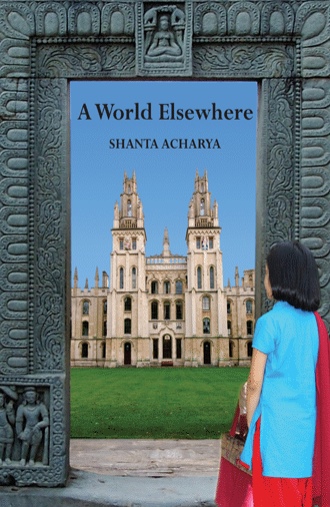
A World Elsewhere is an extraordinary evocation of Indian social life in the 1960s and 1970s. Set in the state of Orissa, the novel depicts the life of the Guru family, especially their daughter, Asha. Intelligent, curious and sensitive, Asha’s happy childhood turns into a lonely and troubled adolescence as her future is mapped out by the social conventions of the day: she will be an educated wife, mother, and housekeeper, married to a man of her family’s choosing. When Asha goes to college, she meets Anand and falls in love with him. Much against the wishes of her family, she marries him—a decision that proves to be disastrous, triggering a series of events that nearly destroys her. We are led through a tragic but redemptive story as Asha, shaped by her unfailing pursuit of love, truth and justice, responds to her unexpected reversal in fortune by seeking a world elsewhere. Exploring notions of love and betrayal, innocence and experience, the choices people make and the role luck plays in life, A World Elsewhere is timeless.
About the Author
Shanta Acharya was born and educated in Orissa, India. She studied at Oxford and Harvard before working as an investment banker in London. The author of nine books, she has been published in fields as diverse as poetry, literary studies, and finance. A World Elsewhere is her first novel.