
Bow Tie
by
Book Cover & Preview Text
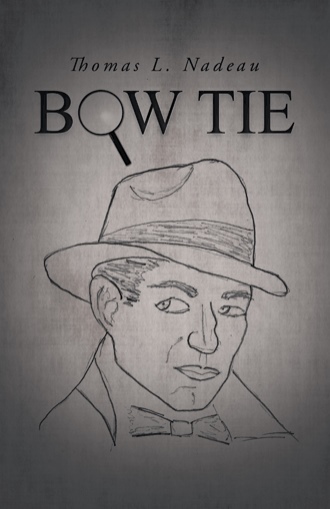
Listen. The hard truth is you can't shake your past. It pads behind and it lurks ahead. It trails, it circles, it crouches for the spring, like a big cat on the hunt. Run in the daylight. Hide in the dark. Pray, if you're so inclined. Doesn't matter. Sooner or later there it is coming at you out of the brush, its eyes afire. Take it from me. I know … Now. It was a Saturday, the day my past came back to find me, and a characteristic San Francisco morning: low clouds and patchy fog, sea in the air, sunny by noon. I was in front of the mirror mulling which bow tie to wear when someone ratcheted my old fashioned doorbell. Graaank graaank! Graaank graaank! My digs were modest and a trick to find, being tucked away one flight up over a used bookstore and a Vietnamese restaurant out on Clement. Visitors never called on me. None. Not even the mailman. That made the noise at the door both an annoyance and a mystery. Graaank graaank! "Just a second," I called out, and headed for the glass paned door with a bow tie in each hand. It was a woman, I could tell, but the curtain lace veiled her face. Graaaank! "Right, okay...," I flipped the deadbolt back and pulled the door open. "Who...," I began, then stopped. When I looked down into that strawberry blonde’s blazing blue eyes my question shifted immediately from Who? to Why? Rumbled, from my head to my heart and back again, like a ship's cargo loose in a dangerous sea. "Hello, Wyatt," she said, and she reached out for a handshake. "Lottie, I, I...," I stammered. "May I come in?" "I, but...." But when you stop and think about it, what else could I say? So, I said it. "Sure, why not," and I reached out for the handshake, too. And that was how Lotta Renz -- my old flame, my old foe -- strutted back into my life, dragging my past behind her. I pointed her to the living room and followed her there, giving her the once over as we went. High toned and strictly 24 karat, Lottie wore her wealth like street gang colors. She was dressed to the nines in a tailored gray glen plaid suit accented with her natural hues: green and gold, the colors of banknotes and bullion. What had it been, six, seven years since I'd seen her last? Well, she surprised me. I would have thought time would have treated her rougher, worked her over in the same way it had me: etched more lines around her mouth, pinched more creases in her brow, added a few more pounds. But no, Lottie was unchanged. She was as young then as we were before. She'd been caught in amber. Time, on the other hand, had weathered me steadily, like the clapboard siding on a saltwater farmhouse. Jack Kennedy was right. Life is not fair. Along with a snazzy leather purse Lottie toted a designer briefcase. Not a good sign. Over the years I spent with her I'd come to regard her briefcases with suspicion. Too often they turned out to be little satchels of trouble. When we got to the front room I was still clutching my bow ties -- one a red and blue polka dot, the other yellow striped. I smiled uncertainly. She sized me up. "Wear the polka dot," she decided. "Goes better with your blue button down and tan slacks." Never shy, Lottie found a seat on the sofa and put in her order. "How about a cup of coffee or something? We have things to talk about," she said, and set aside her purse and briefcase. I rounded up a mug of coffee from the kitchen. While she sipped it, I stood at the mirror and hand tied my bow tie. Lottie watched. Cross the left and the right sides, leaving the right longer. Fold the left wing double to make the bow. From the bottom, loop the right side back over the left to make the cross knot. Pull the right side back through the inside of the cross knot, doubling it over as it goes to make the second wing. "Still wearing the bow ties, I see," she said. "They still your trademark?" Tugging the knot snugly into place, I looked back over my shoulder at her. "I can still tie 'em, if that's what you mean." I teased the final touches into the wings of the bow and sat down in an armchair to face her. "Things to talk about," I prompted. "Yes. Political things. A political predicament to be specific." Again, I looked at her briefcase. It was suddenly fatter and more foreboding. "I'm not in the business anymore." "I know. I heard you went back to newspapers for a while, then into something else. What that something else was nobody I asked seemed to know. They said you just blended into the wallpaper." Into the wallpaper? Hardly flattering, and hardly accurate. "Not exactly." "But I also heard from some others that you still help friends out from time to time -- if circumstances provide." I was curious to know where she'd gotten that information, but no reply seemed the best reply to make at that point. Lottie took my silence to mean she could go on. She took a sip of coffee, set the mug on the coffee table and got right down to it. "I'm in a jam, Wyatt." She looked for my response. I'd be damned if I'd give her one. Let her twist. "A big jam." "Good. Glad to hear it." Lottie let the sarcasm slide. Her new problems apparently out weighed our old arguments. "Have you seen the news these last few weeks about the FBI anti corruption investigation up in Sacramento?" "Only what the Chronicle carried; some radio headlines here and there. Undercover scam. Agents pose as businessmen. Pay officeholders for favors. No indictments yet." Lottie fished around in her purse and pulled out a packet of cigarettes. A new indulgence, I noted. "What you've seen is just the tip of a very nasty iceberg, Wyatt. There's more to come, with indictments expected any day now." Lottie crossed her legs, a simple, girlish act that revealed a bit more thigh and emphasized the taut calf muscles that made her legs the best looking I'd ever seen … ever. She leaned forward and clasped her hands around her knee. With her hands exposed like that I just had to look: nothing there, third finger left. "I think I'm going to get scooped up in it. In fact, I know I'm going to, if things keep going the way they are." "I thought you dropped out of politics yourself after your term as a party officer ended." She shook her head. "Not at all. Oh, I may have lost my public profile, but I've been busy. For the last few years I've been with Riley and Lefkowitz." Robert Riley and Irving Lefkowitz were partners in a hotshot political consulting firm. Big time offices in San Francisco and Los Angeles. High powered clients. Winning record. Very pricey. "I've been doing issue campaigns for them. You know, local and state ballot measures? I'm out of candidate races." "Fascinating, but get to the point. What have you done that might interest the FBI?" Lottie's smile became a smirk. "Right now, the FBI is interested in everyone. It's an election year. Fighting political corruption on the front page gives their image a big boost, which it could use, considering how badly it's suffered these last few years. If you ask me, the feds are so flushed with the success they've had so far they're grabbing anyone they can on any grounds they can find, or invent." "Fine, but what have you done personally to put yourself in harm's way?" "What I do for Riley Lef is I run their speakers bureau, that is, I schedule technical experts, show business personalities and -- here's the crux -- legislators to address special interest groups on topics such as rent control, insurance reform, tobacco taxes, gun control, toxic waste, that sort of thing. Whatever shoe the foot fits." Agitated, Lottie fiddled with her hand jewelry -- her rings, her bracelets, her watch.
Formats

Book Details
About the Book
Former California political “fi xer” turned private investigator, Wyatt (a.k.a, “Bow-Tie”), receives a surprise visit from former flame, Lottie Renz. She pleads with Wyatt to help her out of a jam. The FBI is investigating major corruption in State government in which she was a minor bit player, and she fears she will be cast to the wolves to take major blame. “Save me, Wyatt!” she pleads.
Old emotions get the better of him, and Wyatt starts down the web of Lottie’s connections. They lead to prominent members of the State Assembly and Senate, and the FBI, as well as to shadowy heads of shell corporations. Eventually, the trail leads to possible homicide. Navigating a minefield of shifting and outright dangerous threats, Wyatt attempts to bring the world back into some semblance of his own notions of balance and justice. Written in the style of Roman-Noire by an author who actually worked the political scene, the story reveals behind-the-curtain glimpses of rough-and-tumble California politics that are rarely encountered by everyday citizens.
What an adventure! Nadeau’s writing conveys mood and captures the reader
from the first page. BOW TIE is a memorable entry in the noire genre.
-- Mary Blayney, New York Times Bestselling Author
Combining his Maine-bred Yankee sensibilities with his first hand
knowledge and experience in bare-knuckles California politics, Nadeau’s
Bowtie tells a timeless tale of deception and corruption with a dash of
humor that is especially relevant today.
-- Dan Gougherty, Editor, Elk Grove News
About the Author
Thomas Lawrence Nadeau, Jr., a native of Waterville, Maine, attended the American University in Washington, DC and Cal State at Chico. After stints with the Army and the Merchant Marines, he settled in Northern California, working as reporter and editor for newspapers in Sacramento, Chico, and finally, Marysville. Nadeau received the 1997 Gold Medallion for Excellence in Investigative Journalism from the State Bar of California. He contributed to the Sacramento Bee, Reuters and Newsweek. Nadeau died in April, 2011 at his home in Marysville, CA.