
Restoring Broken Trust
A relationship’s greatest challenge
by
Book Cover & Preview Text
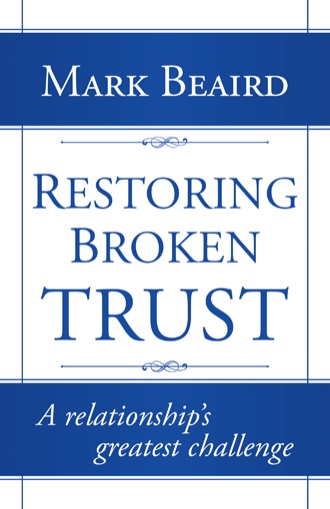
Table of Contents
Acknowledgments
Introduction
Chapter One: Why Trust is Broken
Chapter Two: How Trust is Broken
Chapter Three: Forgiveness and Trust
Chapter Four: The Nature of Forgiveness
Chapter Five: The Nature of Trust
Chapter Six: Committed to the Process
Chapter Seven: Our Initial Response to the Hurt
Chapter Eight: Admitting One’s Guilt
Chapter Nine: To Whom the Confession is Being Made
Chapter Ten: Now That the Door Is Open
Chapter Eleven: It’s Time to Prove Yourself
Chapter Twelve: Tough Questions Remain
Chapter Thirteen: What Does a Healthy, Trusting Relationship Look Like?
Chapter Fourteen: Learning to Connect in a Healthy Way
Chapter Fifteen: Learning to Trust Again
Chapter Sixteen: Keep Your Goal in Sight
Chapter Seventeen: Closure: the Payoff for Doing the Work
Chapter Eighteen: Closing Thoughts
Appendix
Works Cited
Introduction
Broken trust between people takes place in a variety of ways and the closer the relationship the more devastating it can be. Often it is so upsetting because of the affect it has on the relationship and the surrounding relationships. Broken trust in relationships may take the form of an extramarital affair that brings a couple to the point of intense anguish and threatens to dissolve the marriage. In other instances, it is the revelation of dishonest business dealings from a trusted colleague or business partner. Far too often the problem of broken trust stems from a family, parent, or spouse dealing with addictions. I have never dealt with an individual who struggled with addiction—be it drugs, alcohol, gambling, sex, or other vices—that had not woven a web of lies and deception in an attempt to conceal the addictive behavior. Then there is the common but hurtful act of betraying someone’s confidence or failing to follow through on an important promise. It could happen in various ways, but lying for one reason or another is not unheard of among human beings. It’s a common occurrence. Just the same, although it may be common, it doesn’t hurt any less.
Lastly, there are instances of broken trust that fall into the category of emotional hurt that does not necessarily involve lying or even deceitfulness. These breaks in trust come from harsh or hurtful words or actions or a person failing another in a significant way due to apparent carelessness or lack of consideration. In other instances, one person constantly leaves the other person emotionally off balance by threatening to leave the other. As someone described it, “They’re always living with one foot out the door.” Either way, when a person experiences this type of behavior he often feels he can no longer trust that person not to hurt him, abandon him, or fail him in the future. The party in question never lied, never tried to deceive, but was simply so self-absorbed the other person was never really considered in a caring way. Therefore, the trust has been broken. Confidence in that person is lost.
Webster’s Dictionary defines trust as: a. “an assured reliance on the character, ability, strength, or truth of someone or something; b: one in which confidence is placed.” By definition trust is an awesome trait in a relationship that is filled with weighty expectations. Yet, when that “assured reliance” fails, everything we have tried to build or hoped for seems to come crashing down and lies broken in pieces at our feet. It feels like, to paraphrase the old childhood nursery rhyme, Humpty Dumpty, “All the king's horses and all the king's men can't put the relationship back together again.”
However, in this case, feelings only become reality if we fail to challenge them—and challenge them we must. In spite of what some may say, many times—though not always—broken trust can be restored and relationships can be saved. Yes, there are times when we should not continue a relationship. For instance, if being in that relationship would result in being physically or emotionally abused, I would never advise trying to make it work, but that type of mistreatment is not our focus in this book.
In addition, as you read the following pages it is important to remember that everyone does not intend to be dishonest. Not everyone is intentionally deceptive, but it’s a fine line between, I wasn’t thinking how that would look or sound … and, It won’t hurt to bend the truth a little. Yes, wrong is still wrong. Nevertheless, sometimes it is relevant and helpful when we see the hurt was not premeditated, and initially, any hope is welcome. For the time being, just consider the possibility that people can and do change for the better, and the pain of broken trust can go away if we allow the hurt to heal. We will talk more about how that can happen later.
There are several essential elements to rebuilding trust in a relationship, but it can be difficult to know where to begin because people are often at different places in their relationships. Consequently, each person is seeking answers for where they have found themselves and for what they are presently encountering. Therefore, we must choose a starting point, and for me I would like us to begin with forgiveness. Before I finish, I will have circled back several times continuing to touch on forgiveness because it is a key component to rebuilding broken trust and the broken relationship. It may seem that other components would be more important, but remember, the only person you can control is yourself and forgiveness is one of those things over which you have control. For now, let’s begin by trying to answer some questions concerning how relationships get to the point of needing restoration.
Formats

Book Details
About the Book
Wait! Before discarding that relationship or giving up on having a healthy relationship with someone you love, know there is hope. The broken trust in our relationships can often be restored. In Restoring Broken Trust: A relationship’s greatest challenge, you will find many of the answers to why trust is broken, what goes wrong in relationships, and what can be done to make the relationship healthy again. Mark Beaird draws insights and practical guidance from many years of experience in the helping professions and as a professional counselor to address the question he has been asked so many times, “Can the trust ever be restored?” The good news is there is a way trust can be restored. So, before you or someone else labels a spouse, family member, child, teen, friend, or other as “untrustworthy” and gives up all hope, consider the insights waiting for you in Restoring Broken Trust.
About the Author
Mark Beaird works as a licensed professional counselor and freelance writer. Presently Mark works in private practice as a counseling therapist and life/leadership coach. He and his wife Elaine have been married for 30 years and have two daughters.