
A Less Than Perfect Beginning
by
Book Cover & Preview Text
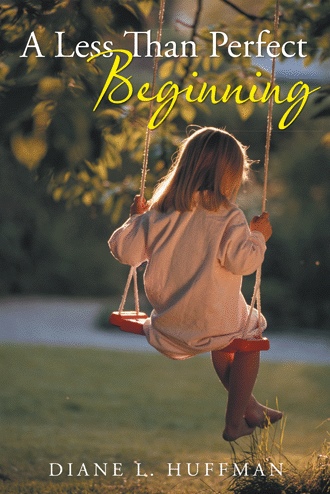
In the Beginning … I had always been independent. And adventurous—downright fearless, in fact. Even a little bit crazy. Okay, maybe a little bit more than a little bit. But I think it was because I was independent and adventurous and fearless and a little bit crazy that I was always able to survive. Perhaps those traits were innate. Perhaps I was just born with the capacity to overcome adversity. Or perhaps they simply developed out of sheer necessity—the necessity of having to endure my first eighteen years and three months of life with an alcoholic father, a brutalized mother, a passive-aggressive sister, and a freaking lunatic of a brother. They say there’s no place like home, and in my case, thank God! I sure as hell hope there’s no other place on the planet like the home in which I was raised. In my formative years, during the late 1940s and early 1950s, I wondered if the families depicted on my weekly television shows—Leave It to Beaver, Father Knows Best, The Donna Reed Show—actually existed in real life. The fathers in the sitcoms always had good-paying jobs. The mothers always stayed home and vacuumed in dresses and high heels. The brothers and sisters were always respectful and obedient. They all lived in perfect harmony in perfect houses in perfect suburbs. Once I was old enough to visit my little friends, I realized that their families did, in fact, resemble those blissful TV portrayals. When one of my Shirley Temple lookalike friends invited me to dinner, a pajama party, or a birthday party, I marveled at how those families actually seemed to like one another, even love one another. Was it possible that behind some closed doors in this country, Dad didn’t continually berate his little girl, Mom didn’t blame that girl for every marital argument, Big Sis wasn’t considered the sole female offspring, and Little Bro wasn’t the devil incarnate? Apparently, it was possible, because I saw the evidence in my playmates’ homes. Even as a guest, I could sit around the dinner table as part of their family and have a genuinely civil discussion. (Yes, civil!) The mom would make us hot cocoa, tuck us into bed, and kiss us goodnight. (So this is what they call motherly love!) The dad didn’t possess a simmering undercurrent that threatened to erupt into angry shouts and ugly accusations. (Wow! No need to beat a path to my bedroom for safety!) My friends’ families were simply—how do I put it? Well, sane. Then I realized that simple sanity had never made an appearance in my house. I compared those picture-perfect families on TV and in my friends’ homes to the Stedman household and knew there was a disconnect—a very serious disconnect. I could neither understand nor explain it, but even at five years of age, I recognized the divide was so great that it must be kept hidden from the outside world. Therefore, I would host no pajama parties at my house. Or birthday parties. Or even playdates. I purposely kept the Stedman dwelling off-limits for entertaining. God forbid that my normal friends from normal homes should discover the dysfunctional and aberrant behavior exhibited behind the four walls of 1723 Longwood Boulevard. Ward and June Cleaver would surely consider us to be unsuitable for their social circle, including their kids’ social circle, and I would never again get another invitation to or glimpse of a normal happy household. So thus was born, at a very young age, the genesis of my plan. A plan which I would dream about and meticulously plot for my remaining childhood years. A plan that would sustain me in my darkest days. It was a secret plan that I would not share with my own kin. But it was a plan that, at the age of eighteen, would ultimately deliver me from them.
Formats

Book Details
About the Book
During Beth Stedman’s formative years in the late 1940s and early 1950s, she wonders if the families depicted on the weekly television shows—Leave It to Beaver, Father Knows Best, The Donna Reed Show—existed in real life. The fathers in the sitcoms had good-paying jobs. The mothers stayed home and vacuumed in dresses and high heels. The brothers and sisters were respectful and obedient. They lived in perfect harmony in perfect houses in perfect suburbs. Once she was old enough to visit friends, she realized that other families do, in fact, resemble those blissful television portrayals. But hers certainly doesn’t. Growing up in her deranged East Coast household, Beth feels like an outsider—but a grateful outsider because her family is riddled with alcoholism, poverty, and an abundance of insanity. Beth has her defenses, though: her faith, a positive attitude, and a penchant for putting a comedic spin on life. She also harbors a secret escape plan and, eventually, the knowledge as to why she has always been the black sheep of the family. Beth survives a deadbeat dad, a defeated mom, an overindulged sister, and a villainous brother to demonstrate that the School of Hard Knocks doesn’t have to ruin you for life. If fact, it can almost guarantee success
About the Author
Diane L. Huffman, happily retired from a marketing career in the high-tech industry, has penned this, her first fictional novel. She was inspired by a raucous childhood that was filled with secrets and psychos, but also humor and hope. Huffman lives in Salt Lake City, Utah, near her son.