Chapter 1. Warm Reception
Introduction
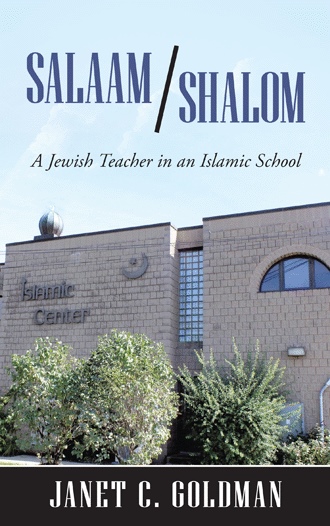
In December of 2009, I took a job as an English Language Arts (ELA) tutor at a private Islamic school. In the spring of 2010, I was promoted to the
position of first grade teacher. My friends thought I was crazy. “What was I thinking?” “How could a Jewish woman be accepted into such an environment?!”
“Did the administration understand my religious affiliation?” Some friends even questioned my safety.
Despite my age, early 50’s, I was a new teacher. Teaching was a career change for me. With a recession-oriented economy, school budgets were tight.
Competing in a geographic location with several teaching colleges, I was also hindered by the competition of an overabundant supply of young teachers.
Additionally, I wondered if my combination of degrees deterred schools from considering me. With two masters degrees, district salary standards might have
placed me in a higher salary range. Consequently, I mailed cover letters and resumes to a wide variety of public and private schools.
When applying elsewhere, I believe I experienced age and religious discrimination. In one small suburban district, a female superintendent literally asked
me when I planned to retire? Maintaining my sense of humor, I replied that with my late start, I didn’t intend to retire for many years. Clearly, my
response was insufficient. One private religious school’s recruiter e-mailed me a mandatory survey, a preliminary step before interviews. Two questions
appeared to immediately take me out of consideration: “How often did I attend church?” “What was my relationship with Jesus Christ?” Not ready to give up,
I added my alternative thoughts: Through my own sense of good morals and good character, I believed I would be a fine role model. Again, my response was
insufficient.
To my delight, a private Islamic school (not my employer) invited me to a job interview. The interview went well; I was told that I might be hired.
However, within a month’s time, the opportunity vanished. This experience motivated me to consider another Islamic school. Again, I was asked to a job
interview. Additional to the questions of typical public school screenings, the principal asked me about prejudice. Specifically, she asked how I would
feel if my students spoke unfavorably of my religion. Surprised, but undeterred, I replied positively while recognizing my job might include an extra
dimension, improving the school families’ perspective of Jews.
Acceptance By The Staff
To meet the needs of pre-K through fifth grade, there were 8 teachers, 4 teacher aids, and 4 administrative staff. Out of this total, 4 were not Muslims.
Except for the computer teacher/technician, the principal’s husband, everyone was female. I was the only Jewish member. Without exception, I felt
immediately welcomed by all. Routinely, people greeted me with smiles, and kind words in the hallways. Noteworthy was the relative warmth of this learning
environment. As a per diem and long-term substitute in public schools, I had not experienced such universal acceptance. Highlighting the extent of this
warmth were the occasional invitations to attend staff members’ life cycle events, ranging from a baby shower to a dinner honoring a deceased family
member.