
Turn On
by
Book Cover & Preview Text
“I am not happy.” She pauses, wanting to choose every word carefully, glances quickly between her husband and the therapist, then looks down at the fidgeting hands in her lap. Straight, shoulder-length hair falling forward frames a pretty face. The room is remarkably quiet, all background noise dampened by solid construction, book-lined shelves, and plush carpet. The two men in the room are still and attentive. “I mean, I should be. I’ve got my health. I’m still young. And I may not look like I did when I was only seventeen and when he,” glancing at her husband, “fell in love with me,” lifting her chin, “but I still look pretty damn good.” The therapist scans her quickly from face down to shapely legs and thinks, Story checks out. “I’ve also got my marriage. I’m married to a good man—young, virile, a good provider. He’s good to me. He’s faithful… I think.” “Just a minute,” as the husband suddenly shifts forward. Quickly, the therapist turns to the man and holds up his hand to gesture “stop.” The man resettles with a glower. The therapist back to the woman. She continues. “No, he’s good. He comes home after work, spends time with me and the kids, fixes things around the house, and spends time with relatives. “Then there’s the kids.” Her expression softens, her voice warms, a smile forms. She says, “Darla is seven and Kyle is five. They’re both bright, healthy, and happy. That’s really the most important thing. “And we have a very nice house, built for us, brand-new, just two years ago. It’s got plenty of room and a big yard. The neighbors are great, too. “I’ve got a good job as a paralegal in a successful office. My boss is terrific. He lets me work a flexible schedule so that I can be there for the kids when they need me, that is, when they’re not going to school. And my coworkers are great. Some of them are good friends. “So why am I unhappy? There’s something wrong with our marriage. It has been very clear for some time that our feelings for each other are fading. He doesn’t seem to be affectionate anymore. We don’t touch each other as much anymore. We may be in the same room at the same time, but we are not together, we don’t notice each other, we’re doing something separate from each other. I might as well not be there sometimes. And, obviously, we’re not having sex as much anymore, which,” she says, sneering at him, “is why we’re here.” “Can I say something?” says the man, irritated. “Not until it’s your turn,” says the therapist. Then, to the woman, “Please continue.” “That just about summarizes it. Isn’t that enough?” Glancing at the timer, the therapist says, “You still have a little time left. Do you want to add anything?” With occasional prompting by the psychologist, the woman goes on for minutes more discussing her children and her friends. Finally, she stops talking, and her gaze darts expectantly back and forth between the two men. “What is it that you want?” asks the therapist. “I just want to be happy.” The therapist reaches over and turns off the timer. He then looks at the husband and asks him, “Are you ready, Matthew?” “Yes.” The therapist presses the button again. “Go ahead.” “Well, I guess it’s sort of the same story for me. I’m young, healthy and, maybe I shouldn’t say this, but I am kind of good-looking. Because of that, I feel pretty good about myself. “I’ve got a good wife: she’s pretty and she’s still got her figure. It’s a little softer, rounder now but it’s still a good figure. I’m proud to be seen with her in public.” “Just a minute…” she says sliding to the edge of her chair. The therapist makes the same “stop” gesture, this time at the wife. She takes the cue, settles back, and becomes quiet again. To the husband he says, “Please continue.” Looking contritely at his wife, he says, “I’m sorry, that came out wrong.” Sincerely, he continues, “Honestly, honey, you make me look good!” He pauses before he continues. They look at each other and the tension lessens a bit. He says firmly, “And I know she’s faithful to me. “Then there’s the kids. I’m grateful, too, that we have two healthy, beautiful kids. I thank God every day. I never take for granted that Karen is a good mother. “As for my job, things aren’t quite as rosy as they are for her. I’ve got a lot of responsibility, a lot of business, a lot of competition, and it’s a tough job. A lot of days I come home and I am either exhausted or tense, or both. But I try not to take it out on the wife and kids. “I agree with Karen on all those other things: nice new house, cars, vacations, all that stuff. Really couldn’t ask for anything more.” Leaning closer to the therapist and staring more intently, he says, “So why am I unhappy? Sometimes I wonder that myself. Sometimes I feel guilty that I’m dissatisfied at all! I shouldn’t be—dissatisfied that is—with everything I’ve got.” He punctuates that last statement by turning to his wife and looking at her soulfully. Turning back to the therapist, he goes on, “It’s just that… I wish…” he drops his eyes and swallows hard, “… we had more sex. I miss what we had when we were younger. Before the kids.” Stiffening quickly, he blurts, “But I’m not blaming the kids! I mean I’d never want to change that!” Murmuring, looking down, “That didn’t come out right either. “I suppose when I put it this way, it seems like a small thing compared to everything else. Maybe it’s asking too much to have the wife, the kids, the house, the job, all the material things, and a great sex life, too.” He looks quickly at the therapist and adds, “It’s not that we don’t have sex, we have sex, it’s just that it’s not as often or as exciting as I want. Is that asking too much?” Karen jumps in again, “You bet your ass that’s asking too much!” but she settles down when the therapist casts her a stern look behind his outstretched hand. The therapist looks at the timer and back at the husband and says, “You still have some time left.” The husband goes on for a few minutes more complaining, more than anything, about his work. He says little about his wife and children. Then he looks up in the air as if he were going to receive some thought from the heavens, and a few seconds go by before he says, “I guess that’s it.” The therapist reaches back to the timer and turns it off. The three of them sit there in silence while the therapist reviews his notes. Both the wife and husband uncross and recross legs. “Mrs. Ramoni, you said that you like your job. When you come home at the end of the workday, are you as tired and tense as your husband is?” “I suppose there is a little of that. But for the most part, my day goes by so quickly, and I enjoy the work. So, no, that’s not what I’m feeling when I get home.” The therapist says, “Is there something else that you’re feeling when you come home?” “Well . . . yes, there is something else. I feel a little resentment because when I come home I have to give the kids my attention, take care of them, and start to make supper. That’s my job because my husband won’t be home until much later. So I’ve got to take care of all that. And then when he comes home, we have to eat dinner right away, and he tells me how tired he is, and when he’s done with dinner I tell him, ‘You go rest, honey, I’ll clean up.’ And then he’s off to the living room to read the paper and relax..” Glaring at her husband, she says, “I can’t relax when I come home. “Then I’ve got more work to do. I’ve got to put away the dishes and the food and keep the kids busy all the while he’s watching the news or reading the paper. Before long, it’s time to give the kids a bath, then put them in bed. To be fair, he often comes upstairs and reads to them before they go to sleep. In fact, he does that pretty much every school night. “So then, it’s almost nine o’clock and we sit on the sofa watching television. When we get in bed and the house is quiet, he sometimes turns to me, reaches over, and begins fondling me!”
Formats

Book Details
About the Book
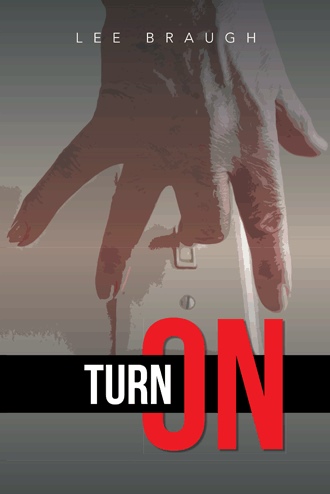
What would happen if automation replaced one of the most intimate of human behaviors?
When a researcher develops a technology that stimulates sexual desire in users via neural pathways, Pandora’s Box is swiftly opened. At first glance, it’s a miracle. With the simple push of a button, the device can bring anyone to climax, even those with orgasmic or sexual dysfunction. But soon, a philosophical war rages. Even though the technology—a surgically implanted electrode—has received the blessing of the FDA, is this really the answer humanity needs?
What impact will this new technology have on sex? How will this alter the very definition of sex? How will relationships evolve in response? What will it do to marriage or fidelity? What effect will it have on intimacy?
Will human sexuality ever be the same—or is the cure just another symptom of the disease?
About the Author
Trained in philosophy, psychology, and sociology, Lee Braugh is a specialist in human behavior. Armed with an insatiable intellectual appetite, decades of sexual and marital experience, and the freedom of retirement from a career as a technocrat, he intends to explore the cutting edge. He currently lives in New York.