
The Rise and Fall of Paradise
by
Book Cover & Preview Text
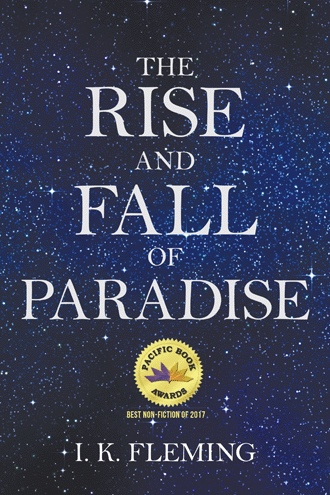
Paradise is the world’s first major scientific discovery. It is also the world’s first widespread religion, and its first universal symbol. Many millennia later it became the world’s oldest and best-kept secret—and remains so to this day. The tale of how Paradise went from being a science to a secret is the subject of this book.
For many people, Paradise is the Garden of Eden, Yahweh-God’s original creation itself as well as the symbol of Earth’s beginning. Paradise, however, is many millennia older than Eden and was never a universal beginning in the sense that Eden, as Yahweh-God’s creation, is a beginning. Paradise’s discoverers knew full well that the Earth and the universe had been in existence long before Paradise came into being. Paradise is the record, then, of one of humankind’s great intellectual leaps, the result of an insight into the nature of things that caused our distant ancestors to see their world in a wholly new light.
That giant leap was the discovery of time––or the dawn of the realization that an order exists that governs the universe. Paradise is that ordered universe, its form and attributes embodying the systems that these early astronomers learned were at work in the vast dome of the skies. An ordered universe posits the existence of orderers, so Paradise was thought to be the visible manifestation of the great intelligence (or possibly several great intelligences) that shaped the principles that kept the ordered universe functioning as it did. The knowable universe, then, was at once a scientific discovery and a metaphysical revelation which, combined, formed a religion that ultimately was revered throughout the inhabited world.
The ancient astronomers used symbols to record the scientific facts they were discovering, weaving them into stories to show how the ordering processes worked. We do the same thing today when we explain gravity in terms of Newton’s apple, for instance, or describe the Higgs boson in the metaphors of sports or syrup. These image-laden myths were passed down from generation to generation, such tales being the portable libraries of preliterate and nomadic peoples. These stories and their symbolic images are the repositories of both the ancients’ scientific and their spiritual truths, for in the Paradise world the two were one and the same.
Paradise survived for millennia, functioning fully both as a science and as a religion, until it ended in the Fall that is so dramatically recorded in the Bible. The Fall was an event of such metaphysical magnitude that it was repeated all over the world, although at different times in different places. Since Paradise was known throughout the world, no corner of the globe remained untouched. The loss of Paradise was universal; and when it was lost, millennia of scientific, cultural, and spiritual achievement was lost with it.
Paradise’s missing story has been pieced together here largely through its surviving symbols. When Paradise was lost, however, many of its symbols were lost with it. The new system of measuring time that was then being developed replaced its symbols with new ones. Those that were too well known to be discarded were adapted, distorted, and subverted to reflect ideas for which they had never been intended, quite undermining their original meaning. Others that survived intact did so as isolated images in contextual vacuums. Because these symbols were the scientific records of well-established facts, altering them in these ways falsified their truths, reducing valuable expressions of human thought to fanciful fairytales. With the meaning of the symbols lost, the ability to think symbolically also disappeared––as Jung has said, “our present day consciousness has no means of understanding it.”1 Since symbols were invariably simple images drawn from ordinary life—like gravity’s apple—they seem ridiculously naive to civilization’s sophisticates, so much so that¬¬ calling something a myth today is tantamount to saying it’s a lie.
It is important to remember, then, that at the time Paradise’s symbols were created they were meticulous records of scientific truths. Since knowledge is seldom static but grows and expands, so Paradise’s symbols likewise grew and expanded over time. This can make it difficult to trace their place in time, particularly since the same symbols stood for both scientific as well as religious truths. But it is precisely because they documented such well-established, carefully observed, and scrupulously measured facts—or the truth—that they have survived as they have; people through the ages simply refused to allow them to disappear completely. Therefore, as Massey points out,
there is nothing of insanity, nothing irrational in the origins of mythology, when the subject is considered in the light of evolution. The irrationality arises from and remains with the non-evolutionist view. It may be affirmed here, for it will be proved hereafter, that the ancient Wisdom is not made up of guesses at truth, but is composed of Truths which were carefully ascertained and verified; that the chief character of the myths in their primitive phases is a most perfect congruity and that they have the simplicity of nature itself … The only work of value left to be written on mythology or typology is one that will account for the facts upon which the myths and religions are founded by relating them once more to the phenomena in which they originated, so we may know how and where we stand in regard to a beginning.2
For the ancients, then, the ordered universe—Paradise—was neither a creation story nor a poetical fantasy but the measured truth recorded as accurately as they were able to determine it. A later era decided that their truths were no truths at all, at which point the ancients’ scientific and religious worldview was first discredited, later pilloried, subsequently forbidden, and, finally, essentially forgotten. Although an unconscionable amount of time has passed between Paradise’s beginning and today, this book is an attempt to rediscover the ancients’ truths so that we might know why they lived and believed as they did––and also why we live and believe as we do.
1 Carl G. Jung, Mysterium Coniunctionis: An Inquiry into the Separation and Synthesis of Psychic Opposites in Alchemy, 528.
2 Gerald Massey, The Natural Genesis: or Second Part of a Book of the Beginnings, 1:15.
Formats

Book Details
About the Book
Paradise—or the ordered universe or the cosmos—began with the discovery of time and its revelation that the universe operates according to universal laws. As Earth's people endeavored to live in harmony with these newfound principles, Paradise evolved into a religion as well as a science, and its truths were meticulously recorded in the myths and symbols that are the archives of preliterate peoples worldwide.
The Rise and Fall of Paradise follows Paradise from its distant prehistoric beginnings through the many millenniums of its evolution to its destruction in the Fall. Though now deemed irretrievably lost, enough of the ancient Paradise's scattered symbolism survives to offer an alternative perspective on how life might be lived on this Earth.
About the Author
I. K. FLEMING uses myths, symbols, epics, legends, religious and alchemical texts, folklore and fairy tales to re-create the long-forgotten history of the original celestial––and ultimately Earthly—sacred landscape of Paradise. This is the author’s first book.