
The Consequences of Molly’s Choice
by
Book Cover & Preview Text
I will always remember the time. The clock in my West Wing office read 11:31 AM, the morning of 27 January. Until that moment, my day had remained fairly normal. I had awakened at the usual hour, jogged the usual course around a dark, quiet city, returned to cook a sumptuous breakfast of eggs, bacon, and coffee, and greeted my yawning husband, Roberto, upon my reentry into our home at the US Naval Observatory. We had assumed this would remain our home for the next four years, possibly longer. He did not consider it Texas or the Big Apple, by any stretch of the imagination, but we had settled in well enough. Over a pot of coffee, always with sugar, we had discussed our agenda for that day, nothing abnormal there. I remember we had the cable news station on to get some early sense of the international markets. I think we finished our meal at around 7:20. As I walked into the still-lit White House, I temporarily had cleared my mind of my marital woes, and focused on the business day ahead. Christina and Lauren Rose—my deputy chief of staff, a thirty-three-year old brunette from Florida; glamorous yet private—per usual, had already arrived. I had listened to the latter describe her recent meeting with House majority leader Jessica Robinson, yet already, unforgivably, my mind had begun to wander. Attentive as always, these two women knew my troubles very well, but said nothing, and carried on as best they could. I was having an affair, no two ways about it, and felt reasonably sure Roby knew about it. He was having an affair—and I damn sure knew about it. Despite his ostensibly conservative principles, our marriage always been one of mutual philandering; it just had seemed more frequent nowadays. In fact, I would not have professed surprise had he skipped across town after my departure to return to the bed of his latest infatuation. No, it had seemed too early in the morning for such things, either for him to do them or me to think them, so, finally, I had let it pass. Lauren reported that Ms. Robinson had solved one of two major hurdles over our revenue bill—which the conservative stations insisted on calling a “massive” tax increase—and felt the measure could reach the floor, if Speaker Franklin gave his blessing, but that now seemed a new problem. Jim Franklin, a balding, punchy, former CPA was pliable enough with the right carton of ice cream. He had reached the position of speaker through audacity and chicanery, even as his views appeared increasingly out of step with the moderate Wagner agenda. He seemed a relic of a different, less tolerable age, even whilst not yet forty-five, but until he retired, we were stuck with him, as his Pennsylvania district had already overwhelmingly reelected him four times and he had raised millions of dollars to help create our current majority. He had too many friends. The hurdle that Lauren had deemed “solved” by Jess, concerned an apparent capitulation on the part of House conservative Democrats, in the form of promised support in the all-but-certain floor battle to come. Without them, we stood no chance of passing this bill in the lower chamber, let alone weaving it through the Senate, thus getting it to our president. An additional thirty-five votes, if delivered in full, would make our task easier, but at present we had no reason for jubilation. Shortly thereafter, our talk had turned to Christina’s most recent trip abroad—two days in Brussels—and so we had spent most of the next hour considering NATO, US-Euro relations, Russia, and the usual topics. The time had raced by quicker than expected, perhaps because we had moved on to a critical discussion on the new man in Chrissy’s life, before Susan Conrad, deputy to the White House chief of staff, arrived in her rather smug manner and informed me of my scheduled meeting with Office and Management director Carolyn Swanker. I knew the reason for the smugness, too. Literally just hours before the inauguration, Chrissy and Susan had again quarreled over the surveillance bill, which, for now, represented the biggest divide between my office and the Wagner/Connor tandem that truly ran the country. They, political even while sleeping, had never ceased to argue that it was a popular measure that would raise our credibility on national security with the voters—never mind our 400+ electoral college majority and six-point national vote margin of victory. We had considered the proposed law dangerous, due in part to liberal views, yet also because we did not want the GOP to have this power in its next turn at the wheel. Susan’s smugness was directly attributed to the late-night tongue-lashing I had received three nights earlier from Molly Wagner herself, annoyed with my alleged lack of disrespect to the White House staff. The president and I had not directly spoken since this unfortunate event, so I looked forward to our budget meeting after her return from Philadelphia. She sometimes upset me, but I had to reconcile our differences and soothe her as soon as possible. When requisite, I can seduce. For now, though, I had rather immaturely scowled at Ms. Conrad, and left to meet the OMB director. I had known Carolyn Swanker, a sixty-year-old married mother of four, since my House days serving New York. Government service had aged her considerably, and though her once-radiant glow had dimmed somewhat, her personality and general good cheer had not abated. Some of President Wagner’s appointees had caused me some distress, but Carolyn was a welcome exception. The budget, a direct constitutional responsibility of the US president, hopefully operational by the autumn, often ranks as a test of a chief executive’s power. I knew for a fact that Molly Wagner would rather leaf through a fashion magazine than examine fine print related to US spending on national parks—so would I, but we were elected to govern for chrissakes—which is why she had asked me to join her on the eve of Seattle last year. It remained early in the process, we had a sizable ways to go, but I had felt negotiations with the House were running smoother than the revenue bill, and we drew strength from the fact that the diabolical Mr. Williams could not filibuster this one. I had implored the president, particularly after the latest round of polls, to put her 60% approval rating to some use, but had sensed hesitation from a woman that too often just wanted to be liked. Jennifer Crowley shared that quality, a dangerous weakness, so perhaps they deserved each other. I had to redouble my efforts, simply put, the margin, whilst on the positive side, threatened to go down to the very last vote—as in budgetary battles of yore—unless the president fought for it. I had thanked Carolyn and returned to my office, settled in over the Times and considered how I should approach Molly over her que sera sera view of the budget, when the phone rang. It was 11:31 AM.
Formats

Book Details
About the Book
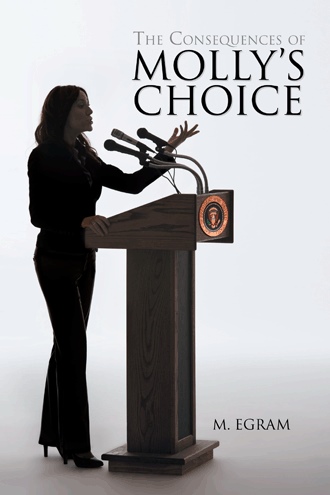
Molly Wagner is a radiant blonde and a rumored former party girl. Her charismatic, joyful personality seems to reveal a shallow core, and she may have a couple of rather large skeletons in her closet. In spite of these skeletons, however, she has just been elected President of the United States.
After a lengthy, personally painful campaign, Molly has come out victorious— the leader of America, having disposed of her competition, chiefly the Republican governor of Ohio in a tense election. Not only did she choose a woman as her running mate, but she chose a Latino woman, Eva Parker. As Molly struggled to move forward after the death of her husband, she drew strength and comfort from her friend, Wall Street financier Jenny Crowley.
Now ready for the White House, Molly’s difficulties have only begun. The decisions she made during the election will have serious consequences. Beneath the hot microscope of public office, Molly’s quirks may not measure up. The press can be cruel, and so can other politicians. Now only time will tell if the most powerful woman in the world will crumble under the pressure, or become the leader America has been waiting for.
This political novel explores age-old questions, such as whether the ends justify the means, whether politics is inherently susceptible to dishonest—if not illegal—behavior by otherwise good people, and whether a politician’s personal life has a place in public discourse.
About the Author
M. Egram currently works for the United States government. The author previously taught English overseas and has published articles or works on US history and US politics. The author lives in Washington, D.C.