
Burnt Fingers
It's a matter of life and death
by
Book Cover & Preview Text
The previous night the protests had been long and violent. The statues in Parliament Square were defaced and some of the police line buckled under the surging, churning mob; the metal barriers that had been put in place were pushed back and some of the riot police were forced to use tear gas to disperse the crowd. There was a death, but it was not Leo’s; one woman was crushed in a stampede as she found herself in a group trying to break down the door of Westminster Abbey and mounted police personnel forced the group away with batons and electric tasers. Finally the centre of Parliament Square was the scene of a huge bonfire, which the protesters claimed symbolised the funeral pyre of British democracy if the Bill was not passed, and the thick black smoke sailed through the darkness like the haggard spectre of plague seeping through London’s skin. The warm orange glow from the burning banners and flags which illuminated the underside of the cloud echoed the cold electric blue of the screens of cameras and mobile phones on which people were recording images of the protests and using social networking to provoke and entice unrest.
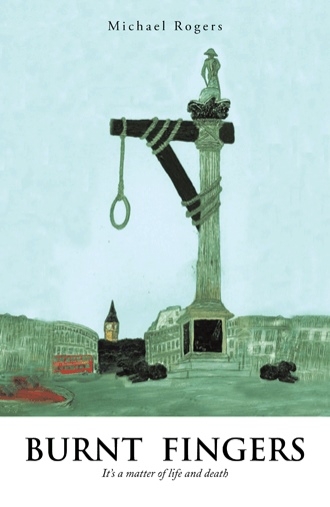
In Trafalgar Square the following morning protesters had erected makeshift gallows in the fountains and on the steps of the National Gallery. Other groups had brought industrial amounts of food colouring with them and had dyed the water in the two fountains blood red, which was a shocking sight as the murky waters of a dark scarlet foamed and frothed as the jets of crimson water shot upwards, casting a cerise mist across the Square and tainting the skin of the crowd in a scene reminiscent of the tomatoes of Buñol. Nelson’s Column had been transformed into an enormous set of gallows 50 metres high by an especially brave and well prepared group of protesters who had attached great tree trunks to the side of the statue using ropes and pulleys; the police had ordered them to stop and had threatened to use force but some of the group were lying down on the top of the beam which highlighted the absurdity of the way that the British state values human life far above common sense, because as soon as there was a human life in the way of the police machine the whole offensive ground to a creaky halt. As soon as there was a protester on top of the plinth, shouting obscenities and rallying the troops with a megaphone as he put an arm around the likeness of Nelson the control of the Square was fully in the hands of the protesters. Trafalgar Square became the centre point of the campaign against the liberal punishments of the justice system and it was here that the TV corporations interviewed protesters to appear on their news programmes, and most of the high profile campaigners would converge here, beneath the Gallows, to give their views which meant that it was where the majority of the protesters wanted to be. It was an iconic sight, having people interviewed with the camera low towards the ground and pointing upwards, filling the shot with sky, and having the protester on one side of the frame and Nelson’s Gallows on the other. It was a sight that filled front pages across the country and featured on news programmes across the world.
A huge crowd had gathered outside Buckingham Palace and were taunting the King and Queen, and all along the Mall between the two sites, an area that was used as a private road for state visitors and ceremonial processions, was now a campsite where protesters demanded that Leo Faulkner be executed after being found guilty of the murder. The police force was woefully overstretched, and there were tense nerves on the front lines of the disputes as many were afraid that a peaceful protest in pursuit of justice for Joy would turn into a mass riot and that violence would spread without mercy. Some left wing extremists had even issued the King with a death threat in the eventuality that the law was rejected, and they were swiftly caught and tried for treason. Daniel Huntley was determined to show the people that he had not lost his grip on power, even if he did not particularly believe that himself. These were dark days for the United Kingdom, and it was all in great danger of becoming a lynch mob, that the trophy of power would pass from the stifled order of the Constitutional Monarchy to the unruly and untamed crowd culture of a hysterical people. They all rallied around Westminster as the vote was underway, and a huge number of journalists, TV crews, and helicopters descended on the area to watch the crowd demand their way, a vast and churning sea of faces and bodies, of all colours, classes, races, beliefs and political views, all wanting the same thing. Some of them were holding banners carrying photographs of Joy that the family had released when she was missing, and others were carrying imaginative tokens of the execution chamber such as enormous inflatable syringes and lassos of hangman’s rope.Local supermarkets had sold out of many things which were red, as well as food colouring for the fountains. Some of the protesters had paid the butchers for the blood from their animals, and balloons filled with blood were launched at several high profile targets. One of them was launched through the railings of Buckingham Palace, landing in a spectacular red splash on the forecourt, and others splattered the sides of Big Ben as they were launched from Westminster Bridge. Valerie Whiting was lauded as a heroine for her contribution to the campaign, but William Sutcliffe’s car was spotted speeding along Whitehall and was promptly drenched in pig’s blood. Matthew Brady only stepped in to appeal for calm amongst the protesters for his cause when someone in Trafalgar Square was apparently bored and frustrated by the lack of carnage and set off a fire extinguisher in the face of a policeman as he patrolled the crowd.
Formats

Book Details
About the Book
Years from now, becoming increasingly desperate for a new life away from London, Alice and Geoff Hewitt make the move to what they think is the perfect village in the English countryside to begin afresh. Their idyllic new start is cut tragically short when their seven year old daughter Joy is abducted and murdered by a paedophile named Leo Faulkner as she walks home from school with her sister Kate.
The whole of the United Kingdom is forced into a bleak winter of soul searching as the Government tries to introduce legislation to restore the death penalty and execute Leo. The young Prime Minister and his Justice Secretary face stiff opposition from human rights groups and heavy pressure from the tabloid media, whilst Joy’s parents differ on their definition of justice.
The Hewitts try to rebuild their life after Joy’s death but find their differing views driving them apart and ruining their marriage. Geoff ’s relationship with Alice takes an abrupt dive into alcoholism and violence. Leo waits in jail for his fate to be decided and when Kate becomes a mother she is forever haunted by the trauma of what happened to her sister. Everything changes when Leo undergoes a dramatic transformation of character, and the parole board are tasked with the unthinkable decision of whether or not to release the reformed murderer back into society.
Just how much is a human life really worth?
About the Author
Michael Rogers studied English Literature and Journalism & News Media at Roehampton University in South West London, graduating in 2010. He has since worked as a journalist and a feature writer for local magazines before fulfilling a lifelong dream by writing novels.
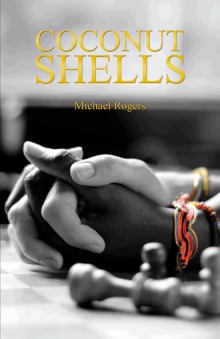
This is his first novel. A second, Coconut Shells, followed shortly afterwards. He lives in Bournemouth, on the south coast of England.