
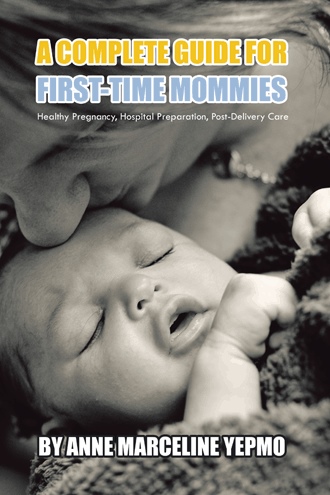
A Complete Guide For First-Time Mommies
Healthy Pregnancy, Hospital Preparation, Post-Delivery Care
by
Book Cover & Preview Text
Understanding Your Pregnancy You’ll be much more relaxed if you understand all the new things that are happening in your body during each trimester of your pregnancy. By your doctor’s calculations, from the start date of your last period, your pregnancy will be forty weeks. (That’s a long time to wonder what’s going on!) Forty weeks of pregnancy is divided into trimesters (three parts). There are distinct markers for each trimester. First Trimester This may sound really strange, but the way doctors calculate your due date, your baby hasn’t actually been conceived during your first two weeks of pregnancy. Conception usually happens about two weeks after your period begins, and your period is counted as part of your pregnancy time. During the first twelve weeks, known as the first trimester, your body is changing and releasing hormones to get everything ready for your baby. You may experience some or all of these symptoms as a result of the hormonal changes: You will probably experience swollen, tender breasts and darkening around the nipples. This may be one of the first outward signs that you are pregnant. You will probably be fatigued—which may cause you to want to go to bed much earlier than you used to. You may actually think you’re coming down with a cold or flu because you feel unusually tired. You may experience morning sickness, which includes an upset stomach and may include throwing up. Morning sickness doesn’t just happen in the morning, but can happen at any time of day or night. You will probably experience moodiness to some degree, which may include feelings of wanting to laugh one minute and cry the next, or laughing or crying at inappropriate times. Even the most level-headed, organized person may start to feel a little out of control and overwhelmed. You may need to urinate more often than previously, with the feeling that you can’t wait very long once you need to urinate. There may be changes in what you like to eat or what smells you can tolerate. You may have cravings for certain foods that you may or may not have previously enjoyed, and want to eat them frequently. You may dislike foods or the smell of foods that you previously liked. You may experience headaches from the hormonal changes. You may experience constipation. As your body makes necessary adjustments, you may experience weight loss or weight gain. In case you’ve forgotten this from your Biology 101 class: during week three of your pregnancy, the sperm and egg come together and form a one-celled entity called a zygote. Your partner contributes 23 chromosomes to the zygote and you contribute 23. The chromosomes determine the gender of your baby as well as their hair and eye color. As the zygote travels down the fallopian tube, it divides and forms a cluster of cells. The inner cells of the cluster become the embryo and the outer cells become the protective and nourishing membranes. The zygote burrows into the uterine wall for nourishment, and the placenta starts to form. It is at this time, about the end of the fourth week, that your pregnancy test will show positive for pregnancy. During the first trimester, your baby’s spinal cord, brain, heart and other organs start to form, and your baby will be about the size of the tip of a pen by week five. The neural tube is closing and your baby’s heart is pumping blood. Your baby’s brain and face start to develop rapidly, and your baby’s arms and legs are growing out from the tiny arm and leg buds, and fingers are forming. Your baby’s eyes are also visible and the upper lip and nose have formed. Your baby continues to grow and develop and by the ninth week, his/her arms develop bones, and tiny toes are beginning to form. By the tenth week, you may be able to hear your baby’s heartbeat by ultrasound. Your baby’s head is rounder and starts to look more like the big round head that is associated with babies. The neck also begins to develop. The baby’s eyelids close to protect the eyes. Your baby’s genitalia will start to develop. As your first trimester ends, your baby will be around two-and-one-half inches long (from crown to bottom) and weigh about one-half an ounce.
Formats

Book Details
About the Book
Pregnancy is an exciting time in any woman’s life. It’s also a time of nervousness and unknowns as your body changes to accommodate the precious little one inside you. You may wonder or even worry about how to do everything you can to give your baby a healthy start. The best way to alleviate your fears and give your child the best start is to understand your pregnancy and to be prepared for what is to come. A Complete Guide for First-Time Mommies seeks to help you prepare for your journey into motherhood and develop confidence along the way. This guide offers answers to your new-mom questions, as well as comprehensive step-by-step instructions for everything from preparing your nursery to preparing your body for the birth of your child. The checklists included will help you stay organized, focused, and always one step ahead. With pertinent information on infant care, this guide also serves as an excellent reference for after your baby is born. Congratulations on taking this step to becoming the most knowledgeable and well-prepared mommy you can be!
About the Author
Anne Marceline Yepmo, born in Bafoussam, Cameroon, relocated to the United States in 2006. She was the only girl born into a family of five children; she is also the mother of ten. She currently resides in Maryland, where she enjoys spending time with family, especially her granddaughter.