
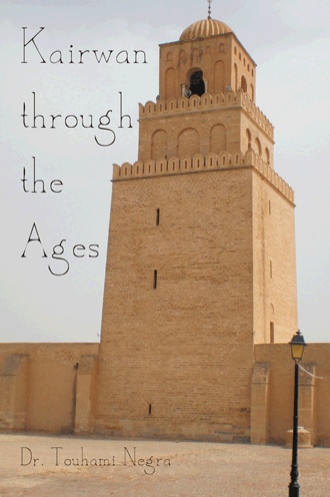
Kairwan through the Ages
by
Book Cover & Preview Text
Stories of Abdelaziz Elaraoui (40), a book of world stories changed into an academic book for those who study English in language schools in the non English world, a story book about 1000 nights.
Formats

Book Details
About the Book
KAIRWAN’S EVENTFUL HISTORY
From a Kairwan Letter to the London Times.
Such is “Holy Kairwan,” the “City of Victory,” which rising on the ruins of the Roman Nicus Augusti, sent forth armies to conquer a great part of two continents, became the seat of a long line of independent rulers, and for centuries afterward was the acknowledged metropolis of Islam in the West. In the time of its long-lasting decline it has served as the rallying-point of the nomadic tribes which surround it, their place of the pilgrimage when living and burial when dead. But all the learning, culture, and erudition of Kairwan have unfortunately almost dissapeared for centuries. … Her ancient splendor has disappeared; her independence and exclusiveness have luckily prevented her entire decay. However, reduced in size and glamour, Kairwan is still an intact Islamic and Arab city…. Future genrations will visit the vestiges of the great Mosque of Okhba and the tomb of “My Lord the Companion” and reflect deeply on the instabilty of things in general and the declined Moslem magnificence and empire in particular and lament the loss of a prestigious past.
The New York TimesPublished: December18, 1881
Copyright c, The New York Times
About the Author
Negra Mohamed Fadhel (born,1944) is a retired English teacher. He taught English in high schools in Kairwan (1973-1978), the he was nominated assistant professor in the Arts Faculty in Kairwan and worked there for ten years (1985- mid 1996). Between 1978-1984, he was appointed vice-principal, then principal in high schools in Kassrine (centre west) and in Kairwan. From 1996 to 2006 he taught English in Riyadh, Saudi Arabia in King Fahad Security College (1996-2000), then Riyadh Technical College (2001-2006). He also taught English in language schools both in Tunisia and in Saudi Arabia (1979-2004).