
The Guernica Project
by
Book Cover & Preview Text
Blatty felt relaxed as he drove through the plant entrance seven-thirty Thursday morning, September 4. No picketers patrolled outside the plant. The union’s deadline for its ultimatum had passed. Blatty stood by his large office window watching his employees driving into the plant lot. “In here Bernie,” Blatty yelled out to his son-in-law. “No damn union in sight.”
“They still might show up, Dad,” Lindquist said as he entered Blatty’s office. He joined Blatty standing by expansive window that gave the two men a view of the entire area in front of the plant.
Blatty boasted. “Hell, I thought of that help wanted ad all on my own, and it did the trick. What the hell do I need those Chicago lawyers for anyway?”
“I hope you’re right, Dad,” Lindquist replied.
“Of course I am, Bernie. I know the people working for me,” Blatty said. “They’re a bunch of gutless sheep.”
At nine o’clock, a worried Seydlitz called Blatty. “Has the strike started up there yet,” she asked, her voice tinged with panic.
Blatty laughed into the phone and then told her, “There’s not a damn thing going on up here, so I don’t need your law firm. I’ve been interviewing since their ultimatum. All my workers know I got replacements for them if they’re dumb enough walk out. That scared the hell out of them.”
“I’m relieved to hear that, Mr. Blatty,” Seydlitz said.
“Yeah, I bet you are,” Blatty exclaimed. “Makes me wonder what the hell I need you people for, anyway.” He hung up on her without waiting for a reply. “Lawyers” Blatty muttered to his son-in-law.
Then a minute after the call from Seydlitz, Blatty yelled out while standing by his window, “Mulrooney, you rotten son of a bitch, I called your bluff and you folded. You don’t have my people with you; I control them. I kicked your goddamn ass.”
Manny Zellman and Rodney Durand met on the sidewalk opposite the Blatty plant before ten o’clock Thursday morning. Eduardo Garcia and Arnie Byork showed up to hold the giant banner announcing the beginning of the strike. The weather was perfect for a strike, a bright sunny day with just the slightest fall chill in the air. The leaves on the trees were beginning to assume a tint of their fall shades. Zellman remembered the weather report calling for beautiful fall weather both Thursday and Friday that week, a mild storm front that weekend, and clear weather for the reminder of the following week. Picketers would not have to march in the rain.
“It’s time,” Zellman told Durand. “Make the calls to the guys in the plant.”
At ten o’clock Thursday morning, Durand called both Zapata and Peterson on their cell phones. “It’s time to walk. Look out the lunchroom window across the street.”
Zapata and Peterson did so and saw Zellman and Durand there. Beside them stood Byork and Garcia holding long wooden poles on each side of a twelve-foot by four-foot banner that read, “Amalgamated Industrial Workers-Blatty on Strike-Protesting Discrimination and Unfair Labor Practices.” Zapata and Peterson then yelled out to those in the lunch area, “It’s time. Check the banner across the street. We’re on strike!”
Then the chant began in the lunch area, a chant that was the product of Durand's devious mind. “On Strike-On Strike-Bust Blatty’s Balls.” The more vocal supporters of the union, men like Nate Peterson, Angel Zapata, Jesus Mendoza, Ralph Menard, and Ernesto Escobar, started yelling out to the other workers, many of whom had taken up the Durand chant, “Get your butts out of here. We’re walking. We’re on strike!”
One of the workers, a Nestor Reingold, told Nate Peterson, “Swede, I can’t afford to go out. I got my family to feed.”
Swede grabbed Reingold by the neck and bounced him against the lunchroom wall. “Nestor, look at it this way. Think how much you’ll have to pay for dental bills if we kick your goddamn teeth out for crossing our picket line?”
Nestor Reingold was convinced. It was time to go on strike.
Ardent union supporters made similar persuasive arguments to induce other employees lukewarm about the strike that it was time to walk. Ralph Menard pulled both Yankovic and Burke aside and told the two men to stay in the plant, meet him after work at the Friedlander Motel bar, and tell him what happened after the walkout.
Rick Kruger leaped onto a table and started yelling, “Guys don’t do this. We have to keep our jobs. Blatty could move the plant.”
Escobar and Mendoza grabbed opposite ends of the table and tipped Kruger off crashing him onto the floor. As Kruger got to his feet, Mendoza shot a right cross to Kruger’s jaw yelling at Kruger, “Shut the hell up, you scab bastard.” His lip split and bleeding, Kruger staggered and then backed away, unwilling to take on Mendoza by himself with all the union supporters surrounding them both.
The chanting grew louder and louder as over two hundred and fifty Blatty production and warehouse employees streamed out the lunch area, through the production area, through the office area, and out the entrance of the plant. Their chant resounded throughout the plant and office area, “On Strike-On Strike-Bust Blatty’s Balls.” The office employees and supervisors, frightened by the shouting mob of workers, backed away and up against the walls. The striking workers thrust their right fists repeatedly into the air as they chanted their slogan of hatred and defiance towards Blatty.
Blatty bolted out of his office when the chanting began. He stood at the top of the stairs watching the first angry group of workers rushing out of the office area onto the street. “Goddamn you union bastards get the hell back to work,” he yelled at the angry mob heading out of his plant. “Get back in there or I’ll fire the lot of you,” Blatty kept yelling.
A number of the workers, seeing the man they hated so much, started to flip him off as he yelled at them. A few of the workers started yelling at Blatty “Go to hell” and “Up yours Blatty.” The more Blatty yelled at them, the angrier the mob became. The greater the number of shouting and striking workers exited the plant, the more enraged Blatty became.
Then Blatty retreated to his office, slammed the door, and stood alone as he watched his workers exit the plant and gather by Zellman, Durand, and the strike banner across the street. Many of the workers appeared to head home. However, many others parked their cars and pickups on side streets, returned to Zellman and Durand, and grabbed picket signs to start patrolling the sidewalks on both sides of Blatty Avenue.
There they were walking back and forth in front of his plant, carrying picket signs protesting his unfair labor practices and his discrimination against Hispanics and African Americans. They kept repeating that damn slogan, “On Strike-On Strike-Bust Blatty’s Balls.” He saw them out there shouting, laughing, and looking up at his window to flip him off. There must be over a hundred of the bastards out there, many with those damn signs. At that moment, the shock of their defiance and disloyalty paralyzed Blatty; all he could do was watch them.
As the picket line shaped up, Blatty felt a deep-seated humiliation that he had never felt before. All of his disloyal workers were out there on the sidewalks in front of his plant testifying to his loss of power over his workforce. Soon, all of Wapapatomie would know that Sheldon Blatty was the first Blatty to face a strike by his employees.
Formats

Book Details
About the Book
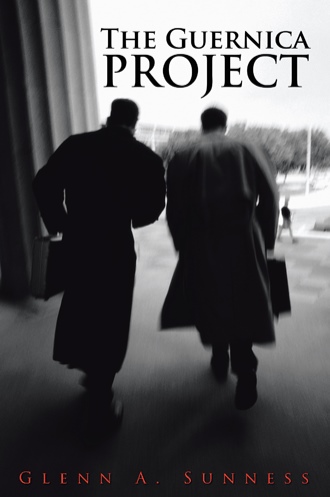
His first day with a Chicago law firm, labor attorney Eric Rossbach meets industrialist Sheldon Blatty. “This corrupt union boss, Mike Mulrooney, is trying to shove a contract down my throat,” Blatty complains. “No damn union’s telling me how to run my company.” Rossbach reassures Blatty that he can keep the Blatty plant nonunion. If a strike turns violent, Rossbach would rush to court for a quick injunction.
Blatty’s new law firm will not deter Mulrooney. He’s determined to use any means available, legal or illegal, to force Blatty to sign a union contract. He has his own aggressive game plan, his Guernica Project, to break the will of antiunion employers like Blatty. However, will Mulrooney’s hardball campaign force Blatty to outsource his production to China?
Rossbach meets Deborah Morgan, the union’s attorney, at the first bargaining session. He thinks she’s beautiful. Rossbach’s marriage is crashing, but he knows that nothing can happen between Morgan and him while they are opposing counsel. Then, while Rossbach and Morgan represent their clients during contract negotiations, in courtroom battles, and during a bitter and deadly strike, their relationship changes in ways that neither had anticipated when they first met.
About the Author
Glenn A. Sunness attended the University of Minnesota Law School, was an attorney with the National Labor Relations Board at its Chicago and Los Angeles Regional Offices, and was in private practice in Los Angeles. Recently retired from teaching, he now lives in the Los Angeles area.