
Womanbeing and Womanself
: Characters in Black Women's Novels
by
Book Cover & Preview Text
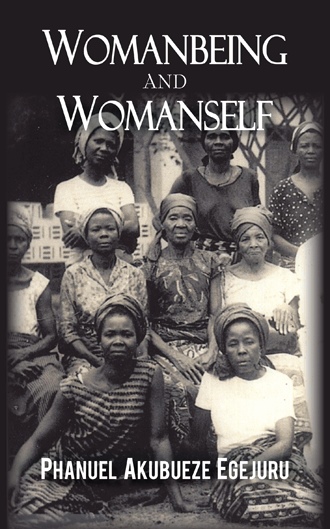
WOMANBEING AND WOMANSELF: CHARACTERS IN BLACK WOMEN’S NOVELS The twin concepts-womanbeing and womanself emerged from a course I developed and have been teaching for more than ten years. The course focuses specifically on the being and the self of black women as projected through female characters in black women’s novels. Simply defined, womanbeing is a state of being for a woman as prescribed and imposed on her by society. In this state, a woman has no control over her life or her destiny. Womanself is the state arrived at after overthrowing womanbeing. In this state, a woman is independent in terms of choices that she makes and other decisions affecting her life and well being. Whereas womanbeing accepts society’s notion that man’s role is more important than woman’s in running the human community, womanself recognizes and approves the complimentary roles of both sexes for the well being of the entire community. Furthermore, womanself insists that a woman should live as her self and for herself; not for her father, husband, lover or son. Womanbeing and womanself serve as a distinctive critical approach and directive in exploring the human condition of the black woman in her struggles for survival and emergence from a societal defined being to a self defining, self affirming person. These twin concepts constitute a central theme that runs through novels written by black women. This theme focuses on the human condition of black women by examining specifically the manifestations of being and self in a character-her evolution from one state to another or the co-existence of both states in one body. In addition to examining the manifestations of being and self of the black woman, the study also looks at the role of woman both in perpetuating womanbeing as well as encouraging the emergence and flourishing of womanself. As a fresh critical approach to black women’s novels, the book effectively gives direction for further examination of womanbeing and womanself in novels by emerging black women novelists. In this regard, the book serves the urgent need to draw the attention of scholars and readers to the works of younger and lesser known black women novelists who share the same visions with their well known sister writers. On the whole, this book is a reference point for what can be found in terms of common themes and portraits of black women in black literature. Novelists whose works are selected for the study include: Flora Nwapa:- Efuru and One is Enough; Christina Ama Ata Aidoo:- Love Story; Buchi Emecheta:- Joys of Motherhood; Mariama Ba:- So Long a Letter; Bessie Head:- Maru; Tsitsi Dangaremgba:- Nervous Conditions; Toni Morrison:- Song of Solomon; Zora Neal Hurston;- Their EyesWere Watching God; Alice Walker:- The Color Purplre; Paule Marshall:- Brown Girl, Brownstones. Following the above brief introduction to the book is a segment of the content titled: THE ULTRA WOMANSELF: PILATE Pilate Dead is a bizarre and quasi-supernatural being in Song of Solomon. She is the model for Toni Morrison’s gender-balanced person. By gender-balanced I mean, possessing in right proportions, both male and female essences in one body. A person so constituted could comfortably do what is normally expected of a man as well as what is expected of a woman. In other words, Pilate can act like a man or a woman depending on the situation. For instance, when Pilate locked Reba’s boyfriend in a chokehold with a knife stuck into his chest as she admonished him, Pilate did what society expected only a man to do. Or, when she put on her “Aunt Jemima” act at the police station so as to retrieve her sack of bones, Pilate acted just as any helpless old woman would act. Both gestures came naturally to her. Pilate exhibited other behaviors associated with men. For instance, a man is expected to endure emotion-wrenching experiences with a straight face and without tears. The only time that Pilate was known to have shed tears was when Circe brought her cherry jam for breakfast; she was twelve and she preferred the fresh fruits she picked from her own trees. In all the heart wrenching- experiences of rejection, humiliation and jeers, Pilate endured all stoically and in 1963, when she was sixty-eight years old, she had not shed a tear. Pilate faced life like a soldier marching to war; she was not intimidated by death, what with her ability to communicate with her dead father. As if to emphasize her manly features, Pilate has an imposing “unwomanly” height. For instance, when her nephew Milkman first saw her, he was so fascinated that he couldn’t extricate himself from Pilate’s presence: Of course, she was anything but pretty, yet he knew he could have watched her all day. Pilate did not fit the picture that people painted of her. Her fingernails were ivory white. She was unkempt but not dirty. Her berry-black lips made her look as though she wore make-up…And when she stood up, he all but gasped. She was as tall as his father, head and shoulders taller than himself…He could see her unlaced men’s shoes and the silvery brown skin of her ankles. Her manly features and actions notwithstanding, Pilate possessed the nurturing and caring attributes of the ideal mother. She provided for her children and indulged them as best she could. Her presence was soothing hence Milkman was drawn to her as to a magnate. And there was her signature song, like a family history book. Pilate was the griot of the Solomon lineage. Toni Morrison created Pilate to be the concrete illustration of her theory of gender balance. However, the main thrust of her theory was on complementary roles of male and female in raising a family and preserving the community. Morrison was exhorting black men not to abandon their women like their ancestor Solomon abandoned Ryna and their twenty-one children. She was appealing to them to “come home” to the family and join their women in raising their children. Though the women might feel capable of heading their families, Morrison knew that men and women needed one another for emotional and psychic balance. As if to underscore her theory, Morrison’s gender balanced Pilate had neither a husband nor a live-in companion. Perhaps it was the desire for male presence in the family that forced Pilate to go in search of her brother. Pilate made her entry in the novel during the exciting moments preceding Mr. Smith’s fatal attempt to fly. Three individuals stood out in the pandemonium that broke loose in front of No- Mercy Hospital. They were, Mr. Smith who was getting ready to fly off the hospital roof, Ruth Foster-Dead who was suffering labor pains at the door of the hospital and a “singing woman” whose powerful contralto distracted the children. To show the reader a better picture of the singing woman, the author presented her as a foil to the properly and neatly dressed pregnant Ruth: The singer was as poorly dressed as the doctor’s daughter was well dressed. The latter had on a neat gray coat with the traditional pregnant-woman bow at her navel, a black cloche, and a pair of four-button ladies’ galoshes. The singing woman wore a knitted navy cap pulled far down over her forehead. She had wrapped herself up in an old quilt instead of a winter coat. The author’s identification of the singing woman via her clothing is deliberate. It plays on the public’s image-conscious mind-set. It plays on the public’s prejudicial and stereotypical equation of clothing with character. Thus, from the description, the reader concludes that the singing woman is poor and irresponsibly untraditional. But the reader would soon discover that the singing woman’s manner of clothing is a bold display of her defiant attitude toward a narrow-minded and mean-spirited society. She might be poor and unconventional in certain things but she was definitely very traditional in things that mattered in life. In the end Pilate emerges as the best illustration of an ultra womanself.
Formats

Book Details
About the Book
The book explores the twin concepts, Womanbeing and Womanself. Using novels written by black women in the U.S., Africa and the Caribbean, the book illustrates how the characters live out their lives either in a state of womanbeing or in a state of womanself or both. To illustrate the twin concepts, the author draws from a work by Jean Paul Satre, titled Being and Nothingness. The author also theorizes on the origin of inequalities between men and women and how that led to the dominance of men over women. The author also claims that women perpetuate the surbordinate position of women unwittingly accepting the assertion by men that women are weak and need the guidance and protection of men.
About the Author
Egejuru was born in Nigeria. She studied at Ibadan, Nigeria and Abidjan, Ivory Coast. Moving to the U.S., she earned B. A. French; M.A. French; M.P. H. and Ph.D. She published critical works, poetry and a novel. She taught in Nigeria and Tanzania. She currently teaches in the United States.