
Patriot Royal
by
Book Cover & Preview Text
Introduction All the world's a stage, And all the men and women merely players; They have their exits and their entrances; And one man in his time plays many parts... From As You Like It William Shakespeare Welcome! The stage before you is hidden now, yet captivating with the muffled sounds of voices and movement emanating from behind the curtain. Slivers of bright light escape from above and below as you await with anticipation the opening act. The characters are taking their positions. Some will seem familiar to you; old dear friends perhaps. Others you will be meeting and getting to know for the first time. There are villains as well as heroes here; the bold, the occasionally bold and the downright cowardly. And a few who will make you laugh right out loud. At times you will reach with the players for the higher ground — placing honor and duty and the well-being of others above your own fear of danger. You will confront the wretches who readily succumb to greed and base self-interests. And you will come to know the common folks too, trying to succeed, or just survive, amid monumental events for which no one was prepared. There is love here — unrequited and requited. There is loyalty, betrayal and redemption. There are formal set-piece military engagements involving thousands of soldiers in uniformed pageantry. There are bloody skirmishes too, and intensely personal struggles that are waged within. Prepare now to go into line of battle where you will face down a terrifying bayonet charge (more than once). You will be expected to endure all the formidable allies of armed conflict: illness, starvation, bitter cold, blistering heat, loneliness, despair. You will meet the enemy, come to know him well — but you will never learn to hate him. Having said all this, you may be surprised to learn that this is not a tale of war but of people. Some from the living past. Others imagined representatives of people whose lives and times beg for telling. All are with us again, with us here, on the stage before you. They are ready and anxiously waiting to escort you to a different, exciting, turbulent time where history will be made and lives forever altered. The stage is now set. The players are in position. The lights are coming up. The curtain is about to rise. So take your seat. Prepare for action. The performance begins. You are now in the time just before the outset of the American Revolutionary War. The War for Independence. By the end of your journey the war will be over. But the Revolution will continue. It continues still. May it ever be so . . . Chapter 1 December 15, 1774 Charles Royal staggered along dimly lit Beacon Street, drawing his cloak tightly about him against the cold, knifing wind that blew off Boston Common. Though it is his 21st birthday, Charles is in a state of anguish. Earlier that afternoon while celebrating with friends at Robinson’s Tavern on King Street he had foolishly lost his late father’s victory sword in a wager with a stranger. Even to a careless youth like Charles the loss of such a prized possession, which his father had bestowed on him for his 16th birthday, brought feelings of regret and self-recrimination. Perhaps the stranger was a vile scoundrel who tricked me out of the sword, Charles thought. As he stumbled forward he paused momentarily and considered returning to the tavern and perhaps reclaiming his property. No, he realized that the stranger had undoubtedly left and the sword was lost. He decided not to tell his family and hoped that no one would notice. Charles turned left onto Joy Street and climbed the narrow cobblestone passage until he reached his family’s residence at the crest of the hill. Swinging open the great oak door, Charles was greeted by the sight of birthday bunting everywhere and the smiling faces of his two younger sisters — Sarah, who was four years his junior, and the effervescent Sally who exuded all the promise of a budding debutante of fourteen. “Happy birthday, Charles!” Sarah beamed as she embraced him warmly. “Smithson!” The valet appeared and took Charles’s cloak and hat. “Happy birthday, Charles!” Sally added excitedly. “The others are waiting for you in the drawing room. Are you surprised?” “Very pleasantly surprised, Sally,” Charles replied, turning his head so that she would not detect his earlier revelry from his breath. Taking his arms, Sarah and Sally led Charles past the other rooms to the large drawing room that had been the scene of many a festive gathering in earlier days. It was not to be so this evening. “You are late as usual, Charles,” said Robert Royal who glanced at his gold watch disapprovingly. “Oh pooh, Robert,” Sarah interjected. “How can a person possibly be late for his own surprise party?” Robert merely frowned and shook his head. “Happy birthday, Charles,” said his mother in a cold, obligatory way. She crossed the room and kissed him dispassionately on the cheek. “I see you’ve been drinking rum again with those idle friends of yours.” Turning to Robert she continued, “None of whom could earn his keep if his very life depended upon it.” “Yes, Mother,” Charles replied wearily. “Well, your father would certainly not approve of such behavior. But as it is your birthday, we shall speak no more of it. Sarah, ask Mrs. May if dinner is ready.” “I have and it is.” Mrs. Royal and Robert led the way into the main dining room followed by Charles with Sarah and a giggling Sally clinging to his arms. Just as they were seated brother Joseph hurriedly entered the room, still trying to tie his cravat. Absentmindedly he bumped into the table, rattling the water glasses. “Joseph!” Robert admonished. “Watch where you’re going!” “Sorry, Robert.” “And just look at yourself!” added Mrs. Royal. “Coming to dinner while still not fully dressed!” “Sorry, Mother.” Joseph smiled and sheepishly offered his hand to Charles as Sarah worked to straighten his cravat. “Happy b-b-b-birthday, Charles,” he stuttered. “Thank you, Joseph,” Charles smiled as he accepted his hand. Sally began a gibberish on the latest fashions in London as the first course was served. Robert sat solemnly at the head of the table in the place that had been the purview of the late Colonel Joshua Royal, the King’s Chief Magistrate in Boston and one of the richest sea merchants in all the colonies. Robert was only 33 years of age but had always struck Charles as being much older. A largely humorless and stern man, he ran the family’s enterprises well and assumed the many roles expected of one of the patriarchs of the city. He was a British subject to the core, as was his mother. He had never married, or for that matter shown any interest in the ladies. His efforts were directed toward enhancing the family’s wealth and position in society. Robert and Charles could not have been more different. Joseph, on the other hand, was a simple and likeable fellow; unpretentious and with a kind word for everyone. At one time Robert had thought that a clergyman’s life might best suit Joseph. But Joseph failed at his studies, as he did at most every undertaking, to the consternation of both Robert and his mother. Except for the keeping of a lovely family garden, Joseph showed little aptitude for anything but good cheer. As the plates for the main course were being set upon the table and the wine poured, Robert rose with glass in hand. Charles thought that it was to toast his special day, but instead Robert looked straight ahead and intoned, “To the King!” All about the table drank to the health of King George III. All except Charles. “You do not honor your Sovereign, without whose beneficence we would not enjoy the blessings of this table!” Robert said to Charles in a challenging tone. “Please, Robert, not today, it’s his birthday!” Sarah pleaded. Both men ignored her. “It was my understanding that we owe our blessings to God,” Charles countered evenly. “And to the toil of our own hands.” “Toil? Ha!” Robert s
Formats

Book Details
About the Book
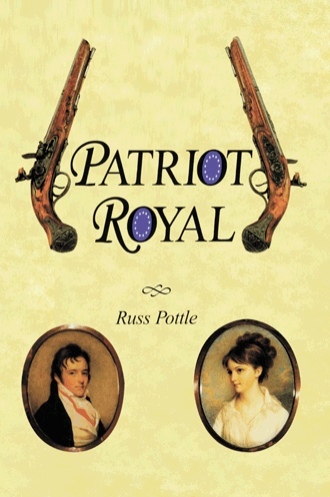
Patriot Royal takes you on a journey to the time of the American Revolution where you will relive the violent, miraculous birth of a nation as seen through the eyes of the representative central character -- Charles Royal -- who undergoes a personal revolution all his own. There are villains here as well as heroes; the bold, the occasionally bold, and the downright cowardly. And a few who will make you laugh right out loud. You will find love here -- unrequited and requited. Loyalty, betrayal, and redemption. There are formal set-piece military engagements involving thousands of soldiers in uniformed pageantry. There are bloody skirmishes too, and intensely personal battles that are waged within. You will be expected to endure all the formidable allies of armed conflict: battle wounds, illness, starvation, bitter cold, blistering heat, loneliness and despair. You will meet the enemy, come to know him well -- but you will never learn to hate him. Having said all this, you may be surprised to learn that this is not a tale of war, but of people. Some from the living past. Others imagined representatives of people whose lives and times beg for telling. They are all ready and anxiously waiting to escort you to a different, exciting, turbulent, history making, history shaping era. Let the journey begin
About the Author
Russ Pottle is an award winning writer with a life-long interest in early American history. He spent his career in the publishing field. He lives in Fairview, Tennessee.