
Defense Acquisition Management
by
Book Cover & Preview Text
The evolution of the requirements definition process is embedded in the history of systems engineering, which originated with Bell Telephone Laboratories in the early 1940s and gained momentum following World War Two. The modern field of operations research can be considered another precursor to requirements generation. During World War Two, scientists in both the United Kingdom and the United States looked for ways to make better decisions in such areas as logistics and training schedules. After the war, these new practices began to be applied to similar problems in industry. Because of its role in acquiring and developing large-scale, complex systems, the U.S. Department of Defense adopted the SE discipline and issued the first systems engineering standard in 1969. One of the key components of this process was the generation of system requirements. What we now consider to be the traditional requirements generation approach, which developed from the realities and assumptions of the Cold War, rested on the premise that the operational community could identify, years (and sometimes decades) in advance, a needed capability, and that a system could be built to defeat a specific, predictable, and identifiable threat. A rigorous process was established to describe the threat, and then, based on this “validated threat,” to justify the mission need. This process highlighted the shortcomings of existing systems, and often reinforced the mindset that, to improve the nation’s security, the requirement was to replace existing systems or technologies with similar, but updated, systems and technologies. Specific performance levels had to be established against specific threats. In reality, however, it was very difficult, if not impossible, for planners to have adequate knowledge of any adversary’s intentions and programs. When the Cold War ended in 1990, the traditional approach to deterrence was no longer appropriate, and the Department of Defense began to grapple with concepts of defense transformation in order to cope with unpredictable threats and a dynamic security environment. It wasn’t until the early 21st century, following the terrorist attacks on the World Trade Center and the Pentagon, however, that real transformation got underway within the U.S. military. As then-Secretary of Defense Donald Rumsfeld stated in the foreword to the 2001 Quadrennial Defense Review (QDR), “A central objective of the Quadrennial Defense Review was to shift the basis of defense planning from a ‘threat-based’ model that has dominated thinking in the past, to a ‘capabilities-based’ model for the future. This capabilities-based model focuses more on how adversaries fight, rather than specifically who the adversary might be or where a war might occur. It recognizes that it is not enough to plan for large conventional wars in distant theaters. Instead, the United States must identify the capabilities required in order to defeat adversaries who will rely on surprise, deception, and asymmetric warfare to achieve their objectives.” The 2001 QDR directed the initiation of a capabilities-based process for defining defense requirements, and a shift from a bottom-up, stove-piped approach to a unified, top-down, joint strategy. The shift to a top-down, capabilities-based planning system that is focused on outputs rather than inputs is a return to the basic principles of the Planning, Programming, and Budgeting System (PPBS) implemented by Secretary of Defense Robert McNamara in 1961. Among the original capabilities-based principles of PPBS was that needs and costs must be considered simultaneously, and that major decisions should be made by choices among explicit, balanced, feasible alternatives. As defined by Paul K. Davis at RAND, “capabilities-based planning (CBP) is planning, under uncertainty, to provide capabilities suitable for a wide range of modern-day challenges and circumstances while working within an economic framework that necessitates choice. It contrasts with developing forces based on a specific threat and scenario.” This is the definition of CBP we will adopt for the discussion in this chapter. To settle on definitions and a set of processes or a framework for developing requirements is only the beginning of the overall requirements definition process. The remainder of this chapter is devoted to a discussion of this modern requirements process, as conducted in the context of CBP.
Formats


Book Details
About the Book
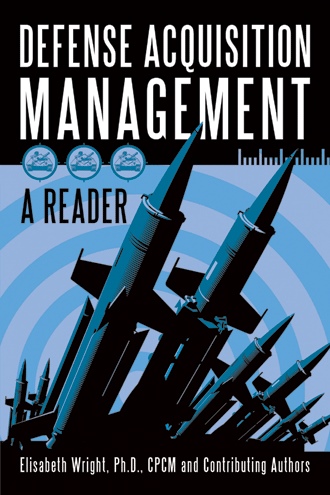
Defense Acquisition Management is a “reader,” that is, it is a collection of articles on various aspects of Defense Acquisition Management. It was prepared by the faculty of the International Defense Acquisition Resource Management (IDARM) program, a division of the U.S. Naval Postgraduate School’s School of International Graduate Studies. It is the initiative of Dr. Elisabeth Wright, the IDARM Program Manager. The name for the IDARM program was not chosen without careful thought. The program is intended for an international audience, and therefore focuses on the practices of the U.S. system only where it employs or embodies a “best practice” that can have universal application.
Acquisition resource management describes the program’s integrated approach to defense program management, defense contracting, and defense logistics management. The chapters in this book encompass the core components of the IDARM Program curriculum: acquisition management, which includes systems engineering and, within it, requirements determination and logistical planning; the negotiation of contracts and agreements, as well as the settlement of disputes; and procurement and contracting processes. It also includes two chapters on specialized subjects in defense acquisition: research and development, and U.S. weapons sales to foreign governments.
About the Author
Elisabeth Wright, Ph.D., CPCM joined the faculty of the School of International Graduate Studies at the U.S. Naval Postgraduate School (NPS) in Monterey, California, in 2000. She is the Program Manager of the International Defense Acquisition Resource Management (IDARM) Program and teaches internationally in the area of defense acquisition resource management and decision making.