
A Soldier's Saga
by
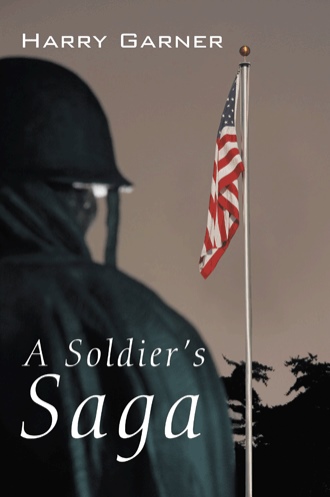
Book Cover & Preview Text
It was difficult to sleep that last night in the barracks, as many of the guys congregated in small groups and shot the bull one last time before we would go our separate ways on leave tomorrow after the graduation. Every so often, raucous laughter erupted from here and there, as the men relived some of the lighter times of basic training.
Even after the barracks was quiet, except for the sounds of sleeping men, I lay awake in my bunk, thinking; and trying to imagine where I would be in six months.
I was still awake at 02:15 hours, when Sergeant Overby slipped up the steps to the second floor of our barracks. He spoke to the soldier who was on fire watch, and eased down the center of the barracks; stopping every once in a while and just looking around. When he came by my bunk, I spoke quietly to him.
“Good morning, Sergeant.”
“Good morning, Private Garner. Why aren’t you sleeping?”
I eased down from my top bunk and replied: “I’m thinking about the guys who have become my dear and close friends during basic training; especially the ones in my squad and in our platoon. Many of them have had a great impact for good on my life. I’m going to miss them when we all depart tomorrow. I only wish I could have gotten to know all 220 of the men in our company as well as I have known the fine men in my squad, and in the second platoon.”
Sergeant Overby asked me: “Would you slip into your field jacket and cap, and put on your boots and take a walk with me? I want to share something that may help you during your military career, especially if you serve in Vietnam.”
“Sure, just give me a minute.”
After I dressed, we stepped outside into the light of the full moon. The temperature was so cold that our exhaled breath hung in the air like miniature clouds.
“You may have wondered why I am still up, and why I was easing through the barracks. Well, ever since I went through Drill Sergeant School, it has become a tradition of mine to pay my platoon an early morning visit on their last night of basic training, while they are all still sleeping. As I walk through the barracks, I stop at each man’s bunk and study his sleeping face in the semi-darkness of the room; and I lift up whispered prayers to GOD for the men in my platoon.”
“I had no idea that a Drill Sergeant could be so sensitive.”
“Garner, I have served in combat during my time in the military; and I have learned something that I wish to pass along to you.”
“Sure thing, Sergeant. I will appreciate anything you may share with me, because this war in Vietnam is really heating up, and I may be called upon to pull a combat tour over there. If so, I want to be as well-equipped as possible.”
“Promise that you will listen carefully, and hear me out.”
“Yes sir.”
“If you think you have become close to the men in your squad and platoon during the past eight weeks, just imagine how close you might become to them in tense, combat situations over a period of months, or a year. When one of your comrades is blown apart after setting off a trip-wire in the jungle, and you have to rush to his side to administer a dose of morphine into his leg to stop his screams, it will take all the intestinal fortitude you can muster to set aside your own emotions and offer aid and comfort to your wounded comrade. I’ll tell you this: if you ever cradle the head of a dying soldier in your lap, and listen while he asks you to write his wife and let her know that someone was with him when he died, it will be a gut-wrenching experience that will haunt you for the rest of your life.”
Sergeant Overby paused, looked up at the starry sky, and then continued: “Son, what I am trying to say is that maybe it is a good thing that a man is not able to get to know all 220 men in his company as well as he gets to know the members of his squad and platoon. For in a combat zone, death is a scene that you will have to process in your heart and mind, week in, and week out. I know from experience that it is a devastating event when a precious friend in your squad is killed in combat; it is a loss you will never fully recover from. If you got to know all the members of your company as intimately as you know the men in your squad, the heavy casualties sustained in a single missile or artillery attack would be an overwhelming catastrophe for you to bear. Do you comprehend what I am trying to convey?”
“I’m not sure.”
“Let me put it like this: it is much more difficult, emotionally and psychologically, on a combat soldier to mop the blood out of a dying squad member’s eyes, hold his hand while you listen to his dying words, and watch him draw his last breath, than it is to fire a twenty-one gun salute at the burial detail of a little-known guy in your company. If you end up in Vietnam, I want you to remember what I’ve shared with you. Many times when a soldier arrives in country, he finds that the guys in his outfit are not too quick to get to really know him.”
“I think I understand. The guys in a combat theater are reluctant to become extremely close to any newcomers, because it is so difficult to deal with their deaths once they have cultivated real friendships with them. I can see how it would be easier for a man to cope with death of a fellow soldier if he has not become really close to him.”
“That’s right, but don’t get me wrong, each man must nurture friendships and bonds with his fellow soldiers, and knowing you like I do, I’m certain that you will have your share of close friends in the Army. I hope you will never be faced with the death of a fellow soldier during your time in service, but, if you are, GOD will give you the grace and strength to bear it.
“Thank you, Sergeant Overby. I shall take to heart your kind words of counsel. Also, it has been an honor to have been trained in your platoon and, most of all, to have had the pleasure of knowing you as a man.”
“You are welcome, Garner. It has been my pleasure to get to know you and to be your drill instructor. I shall look forward to meeting your wife and family tomorrow after the graduation ceremony; and I’ll, formally, say goodbye to you then. I’d better be getting on back to my room and catch a few winks. Goodnight.”
“Goodnight, Sergeant.”
Formats

Book Details
About the Book
Twenty thousand young American men were drafted into the Armed Forces during the final month of 1965. A Soldier’s Saga tells the story of a newly-married young man who receives his draft notice on December 2nd; which leaves him with only twelve days to get his affairs in order before taking the oath of induction on December 15th. During the first few days and weeks in the Army, his emotions are assailed with fears and uncertainties during the ramping-up of U.S. military forces in a little-known country named Vietnam. What started out as a “police action” is turning into a war.
For those who have never served in the military, the account offers insights into the strict regimen of Army basic combat training; and gives a private look into the innermost thoughts of a man who faces the possibility of having to leave everybody and everything he holds dear in America, and venture into the hostile environment of a jungle combat zone. For the veteran of the Armed Forces, this book is a stark reminder of the personal sacrifices that we all made when we left civilian life and entered military service, whether by induction or by enlistment.
About the Author
Harry Garner was inducted into the Armed Forces ten days before Christmas in 1965. In this book, he shares how he was transformed from a civilian into a soldier in the United States Army during the Vietnam War. He has written and published two other books: Recollections, and The Way We Came; as well as a magazine article entitled The Whitetail Buck of My Dreams. Harry is married and resides with his wife, Charlotte, in Nesbit, Mississippi. He currently serves with a military police unit in the Mississippi State Guard.