
Purity in a Dirty World
A Novel
by
Book Cover & Preview Text

RWANDA. 1993 It took a mere 100 days for the Hutu Army, militiamen and citizens to slaughter 800,000 Tsutsis. True genocide has only been applied to three situations since the United Nation’s Resolution 260 (iii) was adopted on December 9, 1948, and Rwanda is one of those three. The actual mass killing began in April 1994, however in August of 1993, when Rose had been doctoring at a Médecins Sans Frontières outpost on the northern plateau, surreptitious killing was being carried out against the Tsutsis minority, and those Hutu politicians requesting peace. In remote areas especially, away from the public eye, a war was being waged against an unarmed race. Plane loads of guns, machetes and other weapons arrived mysteriously and rapidly to arm those intent on despicable atrocities against the innocent and defenceless. Romeo Dallaire, a Canadian and Commander of the UN Assistance Mission, sent out emissaries to warn all foreign aid workers in remote areas to seek shelter or make their way across Lake Kivu into The Republic of Congo. High up in one of the volcanic valleys, nearly two miles above sea level on the east side of the Great Rift Valley, Rose and her accompanying foreign staff were overlooked when some of the messengers were murdered. Even so, the clinic had been warned of coming trouble, and Rose had already witnessed the brutality escalating across the whole continent. The Administrator felt it was safe enough to hold out for a short while longer; at least until they received word from their contact down in Kigali on the political situation. Rose and Ruth were adamant that they should at least try to procure some protection but they were reminded that they were part of a peaceful and merciful organisation. They were given the choice to 'abandon' the gentle Watusis and, of course, they refused. This turned out to be to their cost. Two days later, the attackers came out of the misty dawn, killing anyone in their path. Nurses, patients, children and doctors; all were slaughtered. Rose had been eating breakfast with Ruth and planning the morning ahead when the men came charging out of the trees and down the hillside above the clinic. Both women ran through the kitchen making for the hidey-hole beneath the pantry floor. Ruth was the first down the steps followed by some staff and patients, whereupon Rose threw the door shut before dragging some heavy cases of tinned fruit over the hatch. There was one small male child, lying in a cot in her office, who could not fend for himself and she was duty bound to make a rescue attempt. By this time the attackers were already rampaging through the clinic rooms. Rose killed one man by cutting his throat with a scalpel. She knocked another senseless with a fire extinguisher. The clinic was well alight, as she snatched the small one from his cot, before running into the smoke and the mist. She felt the searing heat of the bullet before the sound of the shot registered. Rose prayed for Ruth's survival as she kept running until she was corralled in a clearing 600 feet from the clinic. A Hutu man stood there smiling, a look of lust on his long, dark face; the evil feeling of power that accompanies the easy taking of lives. The machete blow did not come from this tall, slim, ebony skinned man facing her. She was fully expecting the attack from that direction. She was staring into his black, violent eyes, while holding a dead infant close to her breast. ‘Heaven above forgive me,’ she murmured because she was about to use the tiny body as a defensive weapon against the slashing violence evident in his black glower. She knew she had been shot from a fair distance, while fleeing the medical compound holding the month old child tightly to her chest. The small calibre bullet had entered the left side of her torso near the fourth rib and had been deflected outwards. On exiting it had taken a chunk of her flesh before hitting the child flush in the face. She had fallen, still gripping the baby, but had battled gamely to her feet, not realising immediately that her act of life saving had been fruitless. It was only when she was confronted by the grinning machete man that she looked down. ‘Ah, no,’ she whispered through her dizziness. Bleeding badly and holding the small raggedy corpse, a sense of unreality and detachment enveloped her. She raised her head to confront the insanity before her with nebulous vision. As in other times and in far away places during her life, she would fight to the bitter, useless end. She was concentrating her strength so much, readying herself to throw the baby's body then run, that she didn’t notice the second man emerge from the dense bush to her left. The long razor-sharp maize-cutter’s blade descended from an oblique angle in a semi-roundhouse arc and severed the tiny infant’s head, before the momentum carried it through her lab coat to the crook of her elbow. The blade bit in deeply. She dropped the tiny body as her arm swung down uselessly to her side. The sudden shock from the deep wound caused her to pass out. When she came to, she had been hauled up on jelly legs and leaned against a blackened, smoking tree stump. The burning sensation added to her pain but she did not move. The facing man grinned and pointed to his scrotum. Now in shock, Rose swayed from side to side. Over his shoulder she faintly registered the flaming hospital building. From far away she could hear screaming and occasional shots. Blood dripped from the fingertips of her useless left hand and formed dust covered globules on the parched ground. She looked up to the sky as she began unbuttoning her laboratory coat with her right hand. The two men argued in Kinyarwanda and, with what rudimentary knowledge she had of the language, she knew the talk was over who would have her first. When her coat dropped to the ground they turned to look at her bloody torso and laughed. In the heat of the day she only ever wore pants and a bra under the white, knee-length lab coat. Both garments were bloodied on one side from the bullet wound. The man with the machete stepped up to her, placed his hands on her breasts and pushed her to the ground. Despite the throbbing, intense pain in her almost-severed arm, Rose closed her eyes and escaped to another place in her mind. Her pants were cut away, and her limbs were pushed apart. The man removed his rough cotton trousers, and as her trance-like state took over, she could still smell sex and death emanate from him. Tears filled her eyes as she walked through the elms and sycamores of Northern Pennsylvania holding her father’s hand. Both men tasted the spoils of another gruesome and pointless war. When they had finished and pulled their trousers on, they argued again over who would kill their prize. Captive concubines were of no value to them since these remote highlands contained a veritable smorgasbord of unprotected women and young girls. Victory went to other man this time, and he would deliver the first slash. He walked forward and stood over the small, abused body. Rose had her head turned to the side and, with eyes firmly shut, she was gazing across an impossibly green lawn at the front door of a big country mansion, her family home. Her father was beckoning her to come inside, to return. Another figure stood under the trees near the house, wearing a sad smile. She remembered the river. The blade, dyed a rust colour with dried blood, rose in the air. The downward stroke had commenced when a bullet punched into the base of his skull and exited through his eye socket, pulverising the prominent glabella as it went. He dropped away, and Rose returned to reality and a pain she had never known. The remaining man had barely enough time to look off to the side as multiple, muffled shots struck his upper torso and throat.
Formats

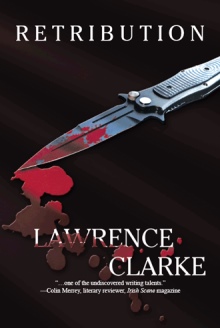
Book Details
About the Book
Love, passion, and danger collide in this engaging tale of two people separated by circumstance, but forever bound by fate.
Rose Gilchrist. The daughter of a wealthy Pennsylvanian mine owner, Rose has pledged to help the underprivileged of the third world. To do so, she volunteers as a doctor with Médecins Sans Frontières. Her journey will take her from the hills and jungles of Haiti to the perils of war-torn Rwanda. And it is in this African nation that she will discover the greatest love of her life.
David Fitzgerald. A former delinquent from the slums bordering the East River, David was given a choice between prison and enlisting. He joins the U.S. Marines and after three years of service, becomes a second lieutenant. David joins a secret international force of highly trained soldiers whose job is to rescue those brave doctors who find themselves caught up in civil wars around the globe, little knowing he will meet a woman who will change his life forever…
Brimming with vivid detail and emotional depth, Purity in a Dirty World plunders the depths of the human heart.
About the Author
Lawrence Clarke was born and raised in Northern Ireland. A former British Merchant Marine, he is a freelance architectural AutoCAD designer in Australia. Lawrence Clarke’s short stories have appeared in Australian magazines and he has three novels published.