
The Last Layer
by
Book Cover & Preview Text
Gerard had arranged to meet Marcel Lefour for lunch. All his meetings with Lefour were over meals. Marcel liked to eat and he liked that Gerard always paid. The restaurant he chose was located on the Rue Christine in Saint-Germain just a short walk from his apartment and closer even to his office. It met Marcel’s requirement of serving food that he considered classically French. Convinced that fresh air and sunshine was the best antidote to jet lag, Gerard took a roundabout route to lunch. Walking to the east end of the Île Saint-Louis, he crossed the Pont de Sully. He liked the view of the French architect Jean Nouvell’s modernist Institute of the Arab World as he crossed the bridge. Peeking into a few bookstores in the university neighborhood just beyond, he walked through the heart of the left bank along the Rue des Ecoles until he reached the Boulevard Saint-Michel, as it turned back toward the river, passing the museum of medieval art in the old Hotel de Cluny. He loved the bustle, the cafes, the shops and Boulevard Saint-Michel as it bisected the left bank following the route of the old Roman road. He then crossed the boulevard and walked through narrow streets roughly parallel to the river until he reached the restaurant. A one hour stroll through the heart of his beloved Paris rejuvenated him more than a long nap. Marcel was seated at a table near the front of the restaurant when Gerard arrived. Even though he was early for their reservation, he knew Marcel would be there. No matter how early Gerard was to one of their meals, Marcel was always there first seated at a good table. Dispensing this time with snails, Marcel ordered for a first course, onion soup and andouillete, a sausage in a mustard and cream sauce. Gerard ordered one of his favorites to start, a salad of endive with crumbled Roquefort cheese sprinkled liberally on it, followed by a filet of sole with crayfish. Two half carafes of the restaurant’s excellent house wine soon appeared, one a Bordeaux, another a Chablis. “So, what goes Marcel?” “Your jewels have not shown up in Paris, in Amsterdam, in Rome, in Moscow or in Marseilles. And I am surprised. With this much stuff you usually see pieces come into the market soon after the heist. The faster it moves two or three steps from the perp, the harder it is to trace. And you would certainly expect to hear about some of those big stones that weren’t in settings. Of course it could have been moved to South America, or Vegas or Hong Kong but it’s a lot safer to move hot items first inside Europe—wonderful open borders and all that.” “What about Pickett?” “A real loner—just stayed in his store and sold overpriced pieces to rich people. Had a reputation for unusual jewelry with real big price tags. Bought expensive wines. Had a nice place off the Rue de Courcelles—would hold parties for his customers but not a guy who gambled, used drugs, or chased women or men as far as I can determine. Did you find anything in his house?” Gerard smiled, “Now, Marcel, that’s police business, but if you are asking about the stolen merchandise, it wasn’t there. But he does have an old farm house in Brittany near La Roche-Bernard. Abou is there now supervising tearing it apart.” “Okay. Gerard, tell me how much do you know about the guy who got ripped off for the big stash over in the 16th?” “Perez? We haven’t been able to interview him. He’s a Mexican, super rich, he has places in Mexico City, down near Acapulco, Miami and in New York plus the big Paris house. We have been talking with his lawyer here and a lawyer in Mexico City. He is supposedly an international investor—probably not too clean.” “And that’s it?” “Yes,” Gerard said apprehensively—he was thinking that Marcel knew more about Perez than he did. “I thought you were such an ace cop,” growled Marcel as he dug into his andouillete, sopping up the sauce in hunks of bread. “Not clean doesn’t begin to describe Perez. Your guy is a very big-time dealer, has a major piece of the white powder business out of Columbia as it passes through Mexico. He ought to call his places here, in Miami and New York—Casa Money-Laundering.” “We suspected something but we had no reason to check him out. He doesn’t appear to do any of his business here. All the paperwork on the jewelry was perfect—photos, insurance appraisals. It looked like a very professional burglary—maybe too professional,” he mumbled almost to himself. Marcel ate vigorously and signaled the waiter for a cheese plate and more red wine. Gerard sat quietly for a few minutes. “You know, Marcel, this case is starting to smell worse than that cheese you like so much.” “Tomme de Savoie is a damned national treasure. Your father loved it and he was a French patriot. I think when he was in London, what he missed most about France other than your sister and sainted Mother, was the cheese. He once told me that the British couldn’t even make a decent Stilton cheese—and they invented the stuff. He would send back the Stilton cheese in London restaurants—their own cheese—what a man he was.” “Maybe the reason I don’t like that cheese is a form of youthful rebellion—the son separating from the father and all that stuff.” “I wouldn’t know. My father took the initiative and separated from me and my mother when I was five years old—the son of a bitch.” “Well, Marcel, what smells is this. Three of the largest jewel robberies in Europe for many years. Two from private owners. One a Mafioso from Naples, now the other apparently an international drug dealer. The third is from a jewelry store and the jeweler was just murdered. The American insurance investigators told me that there was another robbery of a Miami jeweler that may be part of the same pattern.” “You better check to see if the Miami guy is connected to Perez. This Perez is a real bad guy.” They finished lunch and Gerard walked directly to his office. He first had to sit through a meeting on a case involving a ring that stole cars and moved them to Russia. He went through paperwork that had accumulated in his absence while impatiently waiting until it was 8:30 in the morning in New York. As he picked up the phone to dial Catherine’s office, he felt an excitement out of proportion to the news about Perez. This American woman, he thought, has a delayed effect on me. When he finished telling her what Marcel had told him about Perez, she immediately made the connection between Perez’s Miami condo and the jewelry store robbery. She was going to think about how to proceed and she reminded Gerard about the firm’s reluctance to share much information with local police departments; they were particularly cautious with the Miami P.D. “Ah, so I should be flattered that you are cooperating with us.” “Oh, stop fishing for a compliment. Nick thinks you are great and, as you I am sure picked up on, he is not a fan of your country.” “And you?” “You just don’t stop do you—I like your taste in restaurants.” And then she added, “And in ties too.” “Why don’t you hold off for now calling the Miami police. Let me see what I can find out from the FBI. If Perez is the player that Marcel thinks he is and his information is usually very reliable, they will know about him. Have you considered further coming to Paris?” “No, let’s see how this case develops in the next few days.” Feeling disappointed at her response, Gerard finished up the conversation. Then he sat at his desk staring at the phone—feeling something that he hadn’t felt for a long time. Until he admitted it to himself—I miss her.
Formats

Book Details
About the Book
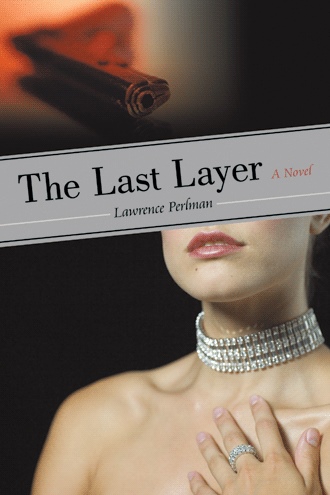
Senior Inspector Gerard de Rochenoir of the elite French National Police is attempting to solve two daring jewelry robberies in the heart of Paris when one of the victims turns up murdered. Gerard’s investigation takes him to the glamorous Caribbean island of St. Barth where he crosses paths with Sofia Mostov, a striking jeweler with a mysterious past and a possible link to the crimes. While Gerard keeps a suspicious eye on Mostov, he meets Catherine York, an attractive American insurance executive twenty years his junior, who happens to be investigating the same two Paris robberies as well as others that may be related. When Pierre Abou, a Sherlock Holmes obsessed cop, makes a stunning discovery at a farmhouse on the Brittany coast, the mystery begins to unravel and leads Gerard and Catherine around the world and straight to another murder. As this unlikely couple becomes intertwined in the complexities of a passionate relationship, they soon discover that Sofia Mostov is not only mysterious and beautiful, but also very dangerous.
About the Author
Lawrence Perlman is a retired lawyer and business executive who has lived abroad and traveled extensively. He is the author of a memoir about growing up in St. Paul, Minnesota, in the 1950s and 60s. He lives in Jackson Hole, Wyoming, with his wife, Linda, and their English Springer Spaniel.