
The First
by
Book Cover & Preview Text
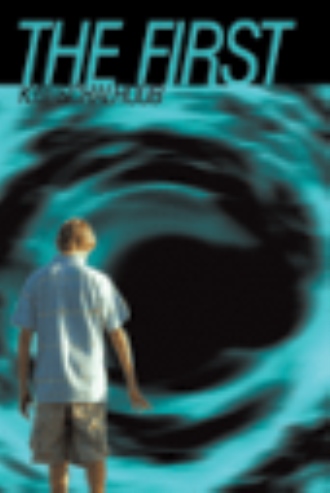
“Will was desperately trying to wrap his mind around exactly what he was seeing. The problem was, it was not seeing in the way of the normal conscious world. This was not the first time he had been in Us, but all the other times he was passive and, he thought, invisible. Although he had a sense that John did know he was there. Will focused on the colors and textures; they seemed to relate in some way to the emotions that the kids were feeling/expressing. John was definitely running the show, but Will did not feel any sense of overt negative control or fear in the other kids. But these kids were his friends. The other kids? Will was not sure how they felt as the bugs chased them away. He did feel some very clear negative emotions based upon the gray and indigo colors expressed as they left.” John Carlisle fully enjoys his eleven-year old life in Hanover, New Hampshire in 2031. He and his friends seize every entertainment technology afforded. Controlling every game, tune, video and communication device thrill them the most. They call it multitasking. And John Carlisle excels in multitasking. However, what John Carlisle doesn’t know in March of that year is that he is about to leapfrog into the virtual world in an exciting and new way, one in which the scientists of the day hope for, but do not wholly understand. Mark Spiegel, Director of The Belmont Institute, in northern New Mexico, needs to placate the Angels, a group of benefactors to the scientific research at the institute. In order that the program succeeds, he needs to assemble a team of specialists from several differing corners of the scientific community and merge them into a new field, one that combines electrical engineering, medicine, physics, and biophysics along with the organic with the inorganic. His agenda also requires he find at least two gifted children to forward the plan. He sends out Trevor Adams to make the institute’s pitch to the parents of children who fit Belmont’s criteria. Trevor visits Deb Carlisle, John’s mother. That following summer in New Mexico, The Belmont team places implants into the brains of a globally diverse group of pre-teen children. Using the implants, the children explore a special virtual world called Us and communicate with each other in it. John Carlisle proves his talents very early. He not only excels at manipulating Us, he dominates it. Under John’s control, the children he befriends from the group thrive. Other children just simply disappear out of Belmont and out of Us. His abilities astound the scientists. Even Will Chen, electrical engineer and adult responsible for monitoring the children in Us, freaks a bit as he watches John. For John, Us is his environment, his creation. The day comes when John and the other children are disconnected from Us. Everyone expects that they will no longer be able to interact in their virtual world. That fact is true for all, except John. When Ed Cunningham, Director of NASA, learns about John’s ongoing successes with the virtual world, he wonders what ramifications John’s talents may have with transforming America’s space program from one of outer space trash collection to the revitalization of space travel. Ken G. Schalhoub hooks his readers with his inventive and wonderfully written futuristic novel, The First. His appealing characters with all their business and scientific tensions move the storyline. Set in the otherworldly New Mexican desert, Ken steeps his novel with rich science; The First intrigues both the scientist and the wannabes with its tantalizing near future possibilities. Schalhoub has truly painted a dreamer’s world.
Formats

Book Details
About the Book
25-June-2031. The International Super Collider had just come online in Geneva at CERN. It had taken twenty-one years after the Large Hadron Collider came online to build the next energy level system. The LHC was such a grand success that the worldwide physics community decided CERN was to become the permanent global center for particle physics. Seventy-eight countries contributed to the construction of the ISC–finally a system that would yield all the unanswered questions left by the LHC – beyond Higgs.
Because he was only eleven years old, John Carlisle knew nothing about the current technology of the scientific world. What he did know was what made his life fun and exciting. His world was one of friends and multitasking. What he did not know or could not know was that the Belmont Institute in New Mexico had different plans for him. Neural implants and the consequences of future technology were in his future. He was about to become part of an adventure that only a dreamer would believe existed.
About the Author
K.G. Schalhoub lives in Keene, New Hampshire, and works in the medical products manufacturing field. His background in the biosciences and his work in the technological arena provide him with a unique perspective on the future. The First is his initial work in the science fiction genre.