
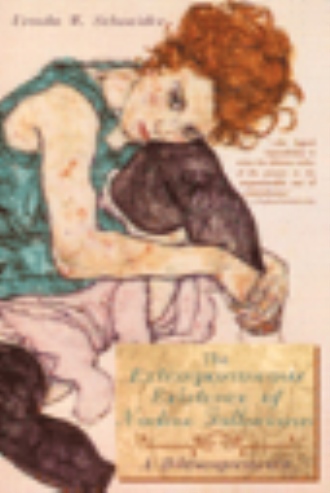
The extemporaneous Existence of Nadine Tallemann
A Bildungsroman
by
Book Cover & Preview Text
Crossing the English Channel had a somniferous effect on the young girl. She had been born in Germany at the leading edge of the Second World War and lived through its entire atrocity. She remembered only too well the heavy bombers of the Royal Air Force, which had relentlessly crossed the sky above her. With their guns sticking out of turrets at the nose and tail of the fuselage and the hip, if not belly of the heavy, four-propellored plane, the noisy, slowly moving aircraft looked like oversized hedgehogs with wings. The mostly young and, when viewed from the ground, always totally invisible English airmen, who operated the B-24s or B-29s, had come across the blue-gray water bracelet that now, as then, glowed between the chalky cliffs of Dover and Ostende. Night after night the pregnant planes had zigzagged through a dark sky. Later, the steadily flying monsters, now reinforced by the US Air Force, had come during the day too. And all of the planes caused death and destruction. Not just factories or important railways junctions, the military target, were demolished, but also endless city blocks went up in flames, killing the civilian population by the hundred thousands during a single night. Firestorms had been deliberately set in Hamburg and Dresden. And in addition to these two big cities, there were also several smaller ones like Pforzheim, the well over seven hundred year old town, noted for its jewelry and watch-making industry, which was located not far from Nadine’s hometown that suffered the same unspeakably savage fate by which thousands of helpless people were scorched, boiled and baked to death by the thousands. The burning of witches during the Middle Ages were relatively small events in comparison. Until recently, the immeasurabe, black depth of the sky had been reserved for birds and the white sails of ships. Only once, way back and just for a fleeting moment, there had been Icarus, the disobedient homme oiseau. But WWII changed all of that. For the little girl the bombers had been birds as well, huge and evil ones. They were like those grotesque, amorphous shapes that haunt the minds of mad people and flutter through the nightmares of sane men and women. For Nadine the raptors were voracious griffins, closely related to dinosaurs, whose metal wings had emerged from the thin pages held by grandmother’s nine pudgy fingers. Her tenth digit, the second-to-last one on her left hand, the ring finger, could not hold anything. Its tendons had accidentally been severed when she was still an adolescent and her finger had remained permanently bent. At fifty-seven, grandmother looked as if she were in her seventies. Her hair was completely white and although once thick and long, it had started to thin out in certain spots. She had never cut her tresses. Instead, at the nape of her neck, she wore them bundled together in a large knot that resembled a songbird’s carefully constructed nest. Grandmother had a bad heart, was short and so obese that she breathed hard each time she climbed a few steps or walked at a fast pace. A quiet and highly religious woman, she had been in the habit of reading fairy tales to her granddaughter while she gently fed her spinach. The five-year-old child abhorred the dark-green, slimy puree, which the elderly woman had cooked and placed on a thick white china plate in front of her. But Nadine did not touch the vegetable. Rather her fingers traced the black corrosive lines that had formed on the white waxy tablecloth. It could not be washed or replaced and the remains of spilled food had to be wiped off with a damp cloth. The little girl was not able to swallow the steaming legume. Sometimes she would stare at its ugly greenness without touching it for an hour that grew into an eternity or until grandmother finally took pity on her and allowed the child to get off her chair. But occasionally Nadine was tricked into opening her mouth by the soothing voice of her grandmother. On “Oma’s” gray-pink and fleshy tongue that was embedded between steadily decaying, yellowish teeth lived Red Riding Hood and Sindbad, the sailor. The little girl was transfixed by their stories. She could never hear enough of them and for their sake she learned to read early. Reading, she soon understood, was the key to a magic kingdom; it was the escape from an unbearable reality into which she had been born. Inside the bellies of the bombers that flew low across the steep, red German rooftops, waited death. It was neatly divided into massive containers, which were piled up next to each other. Extermination slumbered side by side in shiny, elongated, iron-skinned eggs ready to burst open at impact. The child, and even more the teenager later in retrospect, could not imagine that a man, someone similar to her father, was able to pull a switch knowing that he would inflict a horrid death on children, their mothers and grandmothers. Small as she was, she knew that no god, loving or angry, could save her from this human atrocity. Yet, constantly encouraged by grandmother, each night she folded her hands, bent her head full of unruly curls and prayed feverishly for peace and victory. “The Lord is on our side,” Oma would explain. Nadine, looking up from her white, propped-up pillow, saw that her full lips, which added a youthful touch to her face, trembled. Apparently there was a German god and then there were the other deities, which the enemy worshipped. ‘There could not be just one god’, Nadine thought. It did not make sense that friend and foe implored the same idol for victory and peace. How could the same god decide who would live and who would die? And what kind of an idol was he anyway to allow such unrelenting horror? During most of her prayers the child shut her eyes tightly and hoped that she would look like one of the pious, black-dressed, old ladies, who during two nights a week sat next to her in a small, stuffy, austere room that belonged to a Baptist church in Mannheim. They were lamblike women, ancient and strange smelling females in crumpled skirts, who lived like saints and would die soon in any event. Their clothes exhaled the sharp, unpleasant odor of moth powder. The feathers and dried flowers on their small, black hats, which still perched smartly and often slightly on the side of their heads, were half eaten by mice and other vermin. The child watching them, told herself: “Perhaps the angel of death is not so terrible when you are old. But I am little and scarred.” And a new wave of fear shock her. She gave Oma a quick look. The tired woman remained sitting next to her in the dark bedroom, darkened even further by black blinds which each window of the big city had been required to install. The blinds were supposed to mislead the roaring English bombers above their heads. But they never did. Nadine, somewhat reassured by grandmother’s closeness, squeezed her hands more tightly together and tried even harder to concentrate on the evening prayer, which she had long ago learned by heart. Night after night, and toward the end of the war during the day too, grandmother and child, awakened by the screeching sirens of a Fliegeralarm (air-raid warning), fled to the cellar of their building. Sometimes they barely made it before the bombs were dropped. In the humid, subterranean, dirty rooms where coal and potatoes were stored, grandmother and child clung to each other and prayed while they listened in paralyzing fear as the bombs were plucked out of the sky one by one. Sitting hunched over in the corner of an overcrowded, sparsely lit, murkily smelling shelter and clutching Oma’s hand, Nadine heard the bombs falling and waited for their gruesome detonation.
Formats


Book Details
About the Book
The extemporaneous existence of Nadine, a bright, complex but naive and trusting young German woman, begins when she heads to England after World War II.
She thinks she’s leaving home to improve her knowledge of Shakespeare’s English while working as an au pair in a British household, but instead she’s about to learn the ways of the world and become a woman.
Nadine goes to England to look after Lipsey and Peter, the two young children of Julie and James Johnson, an English couple in Groomsbridge. While there, she also meets a number of interesting Englishmen of different ages who appreciate her in varying ways consistent with their social class. One of them is Andrew Gibson, a handsome “sausage boy”, who picks her up at a carnival. She quickly falls for him.
Gain new insights into World War II, assiduously recollected by a young German woman who lives abroad. As the reader watches her, she slowly, incessantly steps forth in The extemporaneous Existence of Nadine Tallemann until her development is forcibly interrupted.
About the Author
Ursula W. Schneider-Hazarian was born and raised in Germany and received a doctorate in Comparative Literature from City University of NY. She has taught at Hunter College, the World Trade Center and Montclair State University, NJ. She lives in Florida where she continues to teach and write.