
Germania
by
Book Cover & Preview Text
The motorcycle was parked at the back entrance, and next to it stood the man and Ingeborg Mohr. He had her by the collar and was shaking her; she was trying to break free, still clutching the bag. As Hans watched, the man raised his fist and hit her in the face, knocking her to her knees; then he jerked her up, twisted her arm behind her and with one hand pushed her into the building, carrying the box in the other. Hans took out the phone and called Breitbach. A second into the ring, Breitbach answered. "Where are you?" came Breitbach's voice. There were sounds of traffic in the background. "On the Oranienburgerstrasse, in an alley next to that former artists' colony." "The place they're fixing up? I know it well! Our friends, though. What are they up to?" "They just went inside the building. They don't seem to be getting along. The guy just hit her and then marched her through the door. He's still got that box. Should I go after them?" "No! Just wait where you are! This is a sensitive matter, Herr Doktor. I have my orders. I must carry them out. I'm already out on the Invaliden Strasse, no more than a kilometer away. I can make it on foot in ten minutes. I'd take a cab but every damned cabbie in Berlin knows me." Hans hung up. The minutes dragged on. A man ducked into the alley from the street, urinated against the wall, and then moved on. A flock of pigeons flew over and landed on the gutted building. Finally, closer to fifteen minutes than ten, Breitbach came walking down the alley. Hans stepped out of the shadows to meet him. Together, without a word, they walked past the cycle and into the building. Just inside was a corridor littered with paper, bottles, and chunks of cement; propped against the wall were toilet bowls, urinals and sinks, most cracked and discolored. Ahead was an elevator shaft with the door chained shut and beyond that, the stairs. With Breitbach in the lead, they started up, pausing at each floor, listening, then looking into the rooms on either side; occasionally the plaster crunched beneath their feet and a breeze blew up a cloud of dust behind them. Graffiti in Turkish, German and English covered the walls. They listened for voices but heard nothing. At last they reached the top. From the end of the passageway came a faint ray of light through an opening to the side where there had once been a door; it seemed to Hans there were faint noises coming from inside it. Signaling for Hans to stop, Breitbach took from his jacket a small flashlight and a pistol. Then he stepped back, knocking over a bottle that had been leaning against the wall; it rolled down the stairs and smashed on the landing. The noises kept on. Peering around the doorframe, they could see before them a large room filled with upended tables, broken chairs, and piles of plaster. The only light came through a window facing the side of another building. At the center something moved. It was a figure, floating in the air, in a strange, slow dance. Breitbach shined his light on it and the beam fell on the contorted face of Ingeborg Mohr, her tongue protruding and her eyes rolled upwards. Her hands were tied behind her back and her feet twitched spasmodically, a few centimeters off the floor. Around her neck was a cord thrown over a pipe in the crumbling ceiling, its other end tied to a metal bracket set into the wall. On her chest was a crudely-lettered cardboard sign with the words "I am a filthy sow. I betrayed the Fatherland!" Breitbach switched off the light and stepped cautiously into the room, with Hans a step behind. In the shadows at the far end of the room something moved. It was the man, now in the field gray shirt and trousers of a Nazi soldier, the chevrons of a sergeant on the flaps of his collar; the helmet he wore bore the runes of the SS. He stepped forward and lifted something to his shoulder; Hans could make out the barrels of a shotgun. At that moment he threw himself forward, knocking Breitbach to the ground and falling beside him, just as there were two flashes of light and two explosions; the wall behind them disintegrated into a shower of plaster and dust. The man broke open the gun, took two more shells from the pack around his waist, and shoved them into the chamber with a loud click. Breitbach raised his revolver, fired once past the man and shouted "Police! Drop it or I'll shoot you dead!" At this, the man lowered to a crouch, turned and leapt over a pile of rubble to the door at the other end, where he whirled around and fired once more, this time hitting Ingeborg Mohr and setting her swinging back and forth, like a pendulum. They could hear his footsteps as he ran onto the landing and down the stairs. Hans moved quickly to a window on the landing and looked out, just as the man emerged from the door, ripping off the shirt and the helmet, and throwing them and the shotgun into the side-car. A few seconds later came the roar of the engine, which soon faded into the distance. Breitbach had stood up; he was looking himself over and dusting off his trousers. "That son of a bitch!" he said. "Quick work, comrade! Getting shot by a fascist dressed for carnival is not the way I want to exit the world! Don't worry, he's not coming back. He thinks half the police in Berlin are after him. I almost wish they were! As for all the noise, let's just hope no one figures out where it came from." Ingeborg Mohr, meanwhile, had stopped her dance. A minute before she might still have been alive, but now she was quite clearly dead; along with the cord around her neck, a blast of pellets had caught her square in the midriff, ripping through her coat and tearing up her flesh-but since apparently her heart had stopped before it hit her there was little blood. With her exertions over, her face had relaxed a bit, but that did little to improve her appearance. Her eyes had popped out like boiled eggs, and mucus below her nostrils had formed a glistening trail across her lips where it mixed with saliva and dribbled down her chin; on her face where the man had hit her, there was a bloody bruise. Breitbach, who seemed ready for everything, took a knife from his pocket and cut the cord at the bracket; with a hiss it whipped around the pipe and Ingeborg fell to the floor, face down. With his foot Breitbach turned her over and then knelt beside her, first emptying her pockets, finding only a package of cigarettes, a few coins, and a personal identity card, which he shoved in his coat. Then he reached down inside her shirt and into her bra, pulling forth a few banknotes and a scrap of paper, which he held up and shined the light on. It was a telephone number, the first part of which was an international code. Sticking this in his coat as well, he unbuttoned the cuffs of her blouse and rolled up her sleeves. "See?" he said, shining his light on her arms. "No wonder she wanted money! Needle tracks. Never used to see those in Democratic Berlin. Welcome to a reunited Germany! As for that fascist bastard, I can see just what he did. First he tied her up and put a blindfold on her-there it is, right on the floor. Then he asked her some questions. See those spots on her face and neck? Cigarette burns--and there's the butt on the ground! Then he put this cord around her neck and just before he hoisted her up, he pulled off the blindfold, so she could see what was happening to her! He'd probably planned this for days, the swine! We got here not thirty seconds afterward! As for the sign, it's what SS execution squads used to put on people they hanged from lampposts at the end of the war."
Formats

Book Details
About the Book
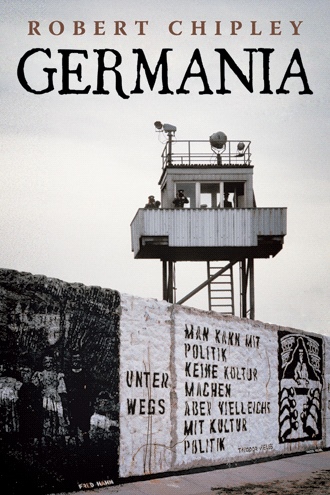
Hans Klug has a past he doesn’t want revealed. A former East German border guard and American expert with the Ministry for State Security, Hans now ekes out a meager living as an interpreter. He is accosted on the street by a woman who demands 100,000 euros, or she will expose his role in the death years ago of an escapee at the frontier.
Hans seeks assistance from his former colleagues, who in return for the money ask him to help locate the Black Vault, a chamber built by the Nazis beneath the streets of Berlin, filled with gold and diamonds looted from death camp victims. The key to the vault is held by an SS-man who escaped to America after the war. Only Hans, with his fluent English, is the right man for the job of traveling to America to track him down.
Many obstacles stand in Hans’ way, including a former Communist party official, a neo-fascist history professor at a Bible college in Virginia, and the daughter of the SS-man. Hans must deal not only with these present perils but the shame of the past—his grandfather, a highly decorated SS-officer, helped destroy the Warsaw Ghetto.
About the Author
Robert Chipley earned an English degree from Yale and a biology degree from Cornell. He is employed by a conservation group that protects rare birds in Latin America. Chipley is interested in modern European history and speaks and reads German. He and his wife live in the Washington, D.C. suburbs.