
The Maghreb Amulet
by
Book Cover & Preview Text
* * * Had it not been for the sputtering of the car, one would have thought they were not moving at all. The vast desert gave Chantal a strange feeling of smallness, almost helplessness. Suddenly the road felt soft under the tires as the layer of sand thickened. The car tires struggled. The wheels spat out sand in the back. The color of the hood had changed from black to muted shades of tan. Even the sky took on a beige tint. Visibility became blurred. Chantal blinked her eyes against the burning dust and fought for breath. The engine emitted a squawky moan. At that moment Claude said, “We are in a sand storm. Roll up the car windows. Quick. Do you have handkerchiefs?” “Yes.” “Tie it around your mouth and nose. Tell Kluge.” Chantal handed a hankie to Kluge and translated Claude’s order. Within minutes, the world around them became a whirl of ochre shadows. The car slowed down, the wheels dug into deep sand. The road had disappeared. Occasionally, patches of the route were swept free and showed isolated road markers. “At least we’re still somewhere near the road,” Chantal whispered. No sooner had she said that when the car shook and twisted. In spite of the closed windows, the inside of the car changed color as a layer of fine sand settled on everything. She felt sand in her hair, in her mouth, even in her eyes. Claude eased his foot on the pedal. The storm flung sheets of sand against the windshield. The car leaped in short spurts, as if climbing into mountains of quicksand, and started to shake from side to side. The engine coughed and finally stuttered into silence. They sat motionless, struggling for breath. Swirling gusts of sand tumbled on the car, like a blanket, slowly covering them in darkness with an eerie howl. The song of death, Chantal thought. What a terrible way to die. We are buried alive. Attempts to draw air into her lungs sent flashes of pain into her chest. She tried to keep her breathing shallow and had the feeling her esophagus ducts were filling with hot sand. Behind her, Kluge coughed and emitted wheezing sounds. Claude looked at Chantal over his handkerchief, as if attempting to smile. His chest heaved. Chantal let her head fall forward and closed her eyes, gritty with sand. After what seemed an eternity the howling stopped. Breathing became easier. Sheets of sand fell off the car windows and revealed dunes that hadn’t been there before. The light gradually reemerged on the horizon, like daybreak after a nightmare. Claude wiped his face and tried to open the car door. Chantal turned to look at Kluge. He sat with both hands in front of his face. His hair and clothes, even his hands, were beige. The car sat in a sunken valley of sand. Chantal jiggled the door on her side. With combined efforts, they freed both car doors and managed to get out. Coughing and spitting, they shook the sand out of their hair and clothes and cleared their lungs. Claude opened the hood of the van and inspected the engine. “We are alive,” Chantal whispered and stared in amazement. “Oh, the divine gift of breathing. Does anyone ever truly appreciate that?” Within minutes, the sun resumed its glare from the merciless sky. Chantal looked in all directions for road markers and saw nothing but the blinding yellow of sand dunes. Suddenly a quivering dot appeared on the horizon, like a dancing ball flickering in the desert heat. It grew larger and moved toward them. Within seconds, it became the silhouette of a man, astride a galloping camel. He was completely wrapped in navy clothing. Only his fiery eyes were visible. And his hand brandished an enormous dagger. “Scheisse, was ist denn das?” Kluge swore and dashed back into the car. Chantal stood erect and faced the newcomer. Her frightened look turned into a smile as he came closer. She touched her mouth and her forehead with her fingertips and said “Sala’am aleikum, Imuhar.” Without a sound, the imuhar slid down from his camel and was at Claude’s side. A movement behind Chantal made her turn. Two other men on camels approached, one of them with a little boy. “Ah, my little friend,” Chantal said and wiggled her fingers. The men crowded around the car and helped Claude clear the sand away. They huddled over the engine and busied themselves with cleaning car parts. Chantal had no idea whether Claude understood any of their guttural Arabic. He seemed to follow their advice. When he got in the car and tried the engine, it turned and finally emitted the familiar hum. Kluge crawled back out of the car with a startled face. He proceeded to brush his clothes, empty his shoes, and wipe his sunglasses. Then he stood aside and stared. The men helped Claude push the car over a mound of sand. They ignored Chantal and Kluge. Without making any sound, a fourth camel had joined the convoy. A teenage touareg stood next to his animal, his eyes riveted on Chantal. He did not return her smile, just kept staring. The elder shouted something that sounded like an order. The young man turned away and busied himself with his camel. Chantal watched the blue men with wonder in her eyes. Hassan had told her that nomads could sense a stranger’s presence within kilometers of their oases. She didn’t believe it then, but she believed it now. What wonderful, mysterious people. She jumped at a raspy voice behind her. “Madame.” The young nomad held a dried gourd filled with a whitish liquid and brought it up to her face. Camel’s milk, Chantal thought and bent down to drink. One never refuses a gift from the blue men, Hassan taught her. She ignored the little objects floating on the surface, closed her nose at the strong odor of dung, and sipped. Her face came up with a smile. She crossed her chest with one arm. “Merci.” The boy went to Kluge with hesitant steps and stopped when the German held up both hands and pushed his palms outward. The young nomad turned to the men working around the car. Their circle opened for him to approach Claude, who accepted the drink. With a happy grin, the young man returned to his camel. He held the gourd with both hands and kept staring at Chantal. None of the blue men had been offered the milk. It’s going to be their meal after we have left, Chantal surmised. Finally, the car stood free with the engine running. Marquette told Klug and Chantal to get in. He turned to the nomads, crossed both arms over his chest, and bowed as a thank you. Apparently he knows some of their symbolic gestures, Chantal thought. Between friendly shouts and encouraging gestures, no translation was needed. The old imuhar loosened his face cloth and said something. Chantal didn’t understand, but she acknowledged his voice with a smile. She went to open the rear of the van and rummaged in her travel case. She brought out a canvas pouch and handed it to the elder. Then she waved to the little boy. “I got something for you too.” She took a bag of lemon candy out of her purse and tossed it in his direction. “Voilà.” The boy skillfully caught it in mid-air. “Merci beaucoup.” He waved to Chantal while his father lifted him up, and the men mounted their camels. The oldest imuhar signaled Claude to follow and rode ahead. Claude stayed in low gear until the road markers became visible on each side of the road. The leader made the convoy move aside to let the car pass and raised his hand in a greeting. Chantal waved until the group disappeared into the glimmering haze of desert sand. Kluge appeared to have awakened from his lethargy. “Who are these people?” “Touaregs,” Chantal said. “They are nomads who live in small oases in the Sahara. They call themselves imuhar. It means ‘free men.’” “This fellow came at us with a dagger. How did you know he was friendly?” “What he held was a scabbard. Only the high chiefs of a touareg tribe will carry that kind of a weapon. I knew he wasn’t going to harm us. I’ve met him before.” “I didn’t know you knew the Sahara.” “Actually I don’t. I only came as far as Laghouat. That’s when I saw him and his little
Formats

Book Details
About the Book
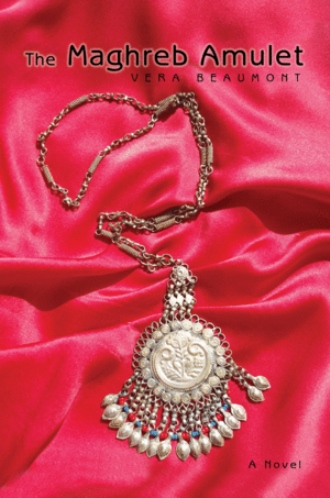
Chantal, an alluring Parisienne, falls in love with Alexander. Her life is turned upside down when Alexander is framed for murder. Guy, an officer of the French Legion, persuades her to provide services in Algiers in return for his help. She soon discovers that she was tricked into working for the Secret Army opposing the Algerian independence. Her attempts to leave this inferno tailspin into an inescapable web of deception. Chantal hides near the Casbah, disguised as a Muslim woman, desperately trying to return to Paris. She makes it as far as Marseille and finds that she is still in the grip of intrigue.
About the Author
Vera Beaumont holds a doctorate in psychology and studied fine arts in her native Europe and the United States. She has traveled around the world and currently resides in Florida.