
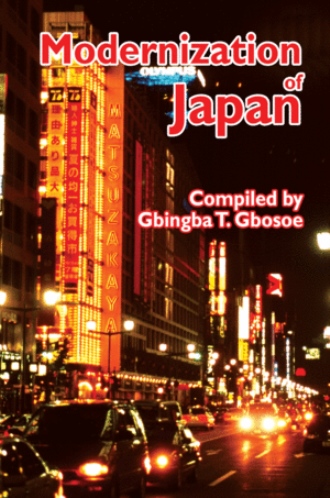
Modernization of Japan
by
Book Cover & Preview Text
Formats

Book Details
About the Book
The Japanese are a diligent people, constantly working to ensure institutional success. The Japanese have an innate ability to copy foreigners. In their effort to build a strong country, the Japanese sought knowledge from abroad; and perfected these learnings in order to effect rapid national development. In their quest for progress, the Japanese have cherished the trait of national self-reliance.
Until the Jeiji Restoration, Japan had pursued a national policy of seclusion that forbade almost all contact with the outside world. The nineteenth century was one of exploration and imperialism for most of the world. The Japanese would not be left alone, merely because they wanted to pursue a national policy of autarchy. European powers began establishing commercial relations with Japan. In 1953, a commodore in the US Navy visited Japan with the aim of opening trade contacts. After years of negotiations, treaties were signed authorizing an opening of a few ports to foreign trade. Simultaneously, Japan embarked on a policy of expansion in China and Korea due to its need for fertile soil and natural resources. This policy led to war with China in and with Russia.
About the Author
Gbingba T. Gbosoe, was born in Foya District, Lofa country, Republic of Liberia. Both his parents are farmers. With the support of his mother, he graduated from Voinjama High School in 1977 and matriculated to the University of Liberia, where he obtained his B.A. in political science. In 1988, he got the Japanese Government Monbusho scholarship, enabling him to undergo graduate studies in international politics in Japan.