
Renewable Energy Policy
by
Book Cover & Preview Text
Formats

Book Details
About the Book
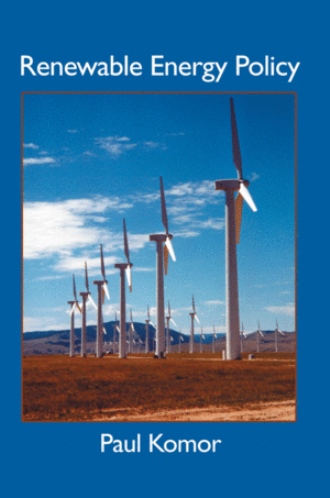
Renewable energy is the key to the future of humankind. Wind power, solar (photovoltaic) energy, geothermal power, and other forms of renewables can help solve our most pressing environmental problems, including global climate change. But how do we move these promising technologies out of the laboratory and into widespread use? Renewable Energy Policy shows what public policy can-and cannot-do to help tap renewables' promise.
Renewable Energy Policy takes a pragmatic, nuts-and-bolts look at the myriad government efforts to promote renewables, and reports back on what works, what doesn't, and why. In clear, jargon-free language, Renewable Energy Policy shows how and why some policies have achieved impressive results, and others have failed. Skillfully interweaving technology, economics, and politics, Paul Komor reveals how the best of policy ideas often end up with unintended results.
If you want to know how much wind power really costs (Chapter 2), why Germany's renewables laws are "crude but effective" (Chapter 8), or the three reasons why the UK's green energy market is a flop (Chapter 4), then you need to read Renewable Energy Policy.
About the Author
Paul Komor is a member of the graduate faculty at the University of Colorado-Boulder (U.S.), with appointments in both the Department of Civil Engineering and the Department of Environmental Studies. Prior to joining the University of Colorado faculty, he was a Project Director at the U.S. Congress? Office of Technology Assessment (OTA), where he worked with House and Senate Congressional Committees in preparing and evaluating energy legislation. Paul holds a B.S. from Cornell University, and a M.S. and Ph.D. from Stanford University. He can be contacted at Paul.Komor@colorado.edu