
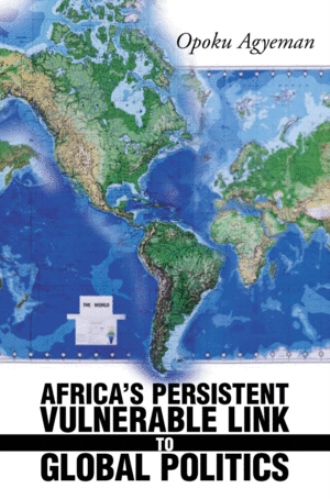
Africa's Persistent Vulnerable Link to Global Politics
by
Book Cover & Preview Text
Formats

Book Details
About the Book
A key dimention of global politics is the interaction that takes place between the nation-states as primary actors, and the systemic environment within which the actors operate. How a nation-state relates to the structural realities of the international system depends very much on its relative strength or weakness within the global system. Linkage vulnerability implies that the actors caught in it tend to be severely handicapped in their interactions with the world system; that they tend to have little or no say in configuring the underlying linkages. By any yardstick, Black Africa's relationship to the global system provides the quintessential depiction of linkage vulnerability. The book, which covers the period from the 1960s to the 1990s, portrays the persistence of Africa's vulnerability to global politics across such evocative African places as the Congo(Zaire), Angola, Mozambique, and South Africa; and it encompasses such issues as the lack of tenaciousness of spiritual-dignificatory values, the tenuous commitment to the solutions inherent in Pan-Africanist ideology and stategies, the institutional vacuum engendered by praetorianism, the racism of a near-hegemonic Western power toward Africa, and Western imperialistic terrorism against Africa.
About the Author
Opoku Agyeman holds a Doctorate in Political Science. He has taught, among other institutions, the University of the West Indies, the University of Dar es Salaam, the University of California at Berkeley, Cornell University, and Drew University. He is currently Professor of Political Science at Montclair State University. Among his published books are: The Pan-Africanist Worldview (1985); Nkrumah's Ghana and East Africa: Pan-Africanism and African Inter-State Relations (1992); and Pan-Africanism and Its Detractors (1997).